Astronomy is one of the most inspiring sciences: it invites us to examine the night sky and, in doing so, explore profound questions about our universe. But for many students, it’s also a challenging subject. Beyond memorizing names of stars and planets, astronomy demands strong mathematical reasoning, physical insight, observational skills, and persistence.
In this article, we’ll walk through how to build a solid foundation, adopt effective study strategies, choose the right tools, access top-tier learning resources, and overcome common obstacles. By the end, you’ll have a clear roadmap to mastering astronomy as a student.
1. Building a Strong Foundation in Astronomy
Key Concepts You Must Know

At its core, astronomy rests on the interplay of physics and mathematics. Some essential areas to grasp early on:
- Celestial mechanics: orbits, gravitational interactions, Kepler’s laws
- Electromagnetic spectrum, spectroscopy, and how we “see” different wavelengths
- Stellar evolution, galaxies, cosmology (big bang, dark matter, dark energy)
- Astrophysical measurement: luminosity, distance (parallax, standard candles)
The Role of Math and Physics
Without a solid grip on algebra, trigonometry, and calculus, many astronomy topics become opaque. Likewise, classical mechanics, electrodynamics, and quantum basics are essential—especially for advanced astronomy or astrophysics courses. Think of astronomy as applied physics at a cosmic scale.
Curiosity & Observation as Drivers
One of the advantages of astronomy is that observation is accessible (with modest equipment). Cultivate curiosity: question what you see, compare with predictions, and gradually reconcile theory with real sky data.
2. Effective Study Strategies for Astronomy Students
Active Learning Techniques
Don’t just passively read or listen—actively engage. Some strategies:
- Summarize each chapter in your own words.
- Ask “why” and “how” — every fact should be tied to a mechanism.
- Create concept maps linking themes (e.g. stellar evolution → nucleosynthesis → supernovae).
- Teach a peer or explain a concept aloud—teaching deepens understanding.
Visualization & Models
Astronomy is highly visual. Use diagrams, 3D models, and animations to internalize spatial relations. For example: orbital paths, coordinate systems (RA/Dec), or galaxy structures.
Observation Practice
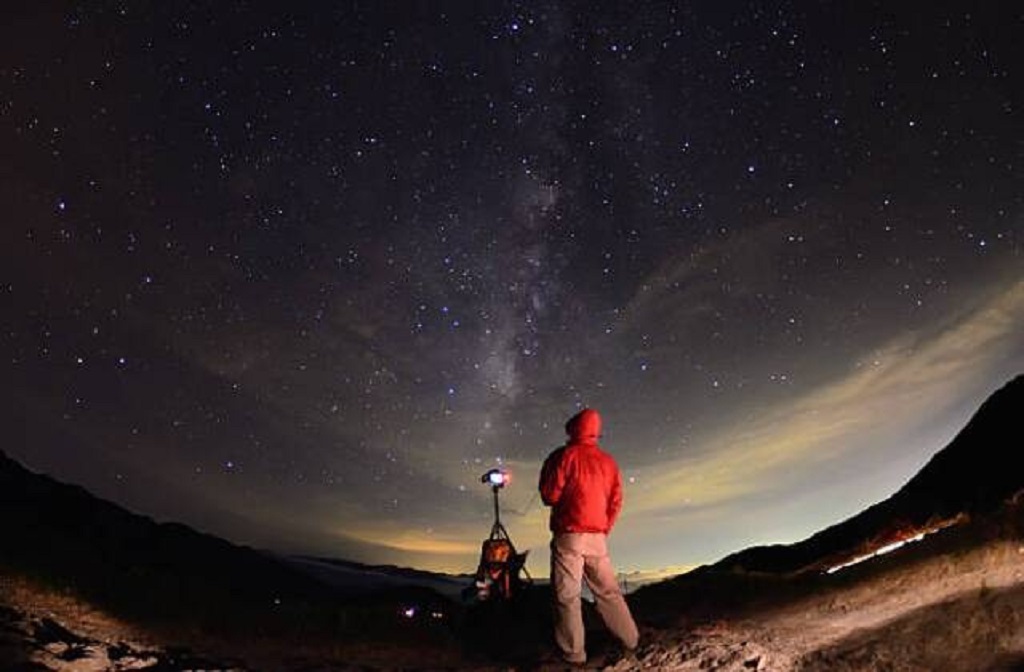
Theoretical knowledge solidifies when you see it. Schedule stargazing nights, try to identify constellations or planetary motion, or employ your telescope/binoculars to observe moon phases, star clusters, or bright planets.
Time Management & Balanced Learning
Astronomy study is multi-faceted: theory, problem sets, observation, data analysis. Allocate blocks of time deliberately (e.g. 1 hour for math, 1 hour for observation, 1 hour for reading). Use spaced repetition (revisit topics periodically).
Collaborative Learning
Study groups, astronomy clubs, or online communities (forums, Discord, Reddit) help you see alternate viewpoints, tackle tougher problems, and stay motivated.
3. Must-Have Tools for Aspiring Astronomers
Hardware Tools
- Telescopes: For beginners, a Dobsonian or small refractor is a good start; more advanced students may move to GoTo telescopes or reflector systems.
- Binoculars & Mounts: Useful for wide-field sky views and easier portable setups.
- Cameras & Astrophotography Gear: Attach CCDs or DSLR cameras to your telescope for capturing deep-sky images.
Software & Digital Tools
- Planetarium Apps: Stellarium, SkySafari, and other mobile apps help you visualize the sky on demand.
- Simulation Software: Celestia, Universe Sandbox, or OpenSpace let you “fly” through space virtually.
- Data Analytics Tools: Python (with NumPy, AstroPy), MATLAB, or even Excel for analyzing observational data or simulations.
- Source Code Repositories: The Astrophysics Source Code Library (ASCL) hosts many astronomy/astrophysics codes.
4. Top Online Learning Resources
Free Educational Platforms & Resources
NASA offers a wealth of astronomy and STEM learning materials. Their “Learning Resources” catalog contains lesson plans, interactive simulations, and activities.
The “Universe of Learning” initiative provides resources for students and educators to explore astrophysics topics at home.
The Center for Astronomy Education is a NASA-supported resource connecting instructors and sharing pedagogical practices.
Paid Courses & Certifications
University-level online courses (e.g. via edX, Coursera) in astronomy or astrophysics can provide structured depth and credentials. When possible, opt for courses taught by well-known institutions or experts.
YouTube, Podcasts & Multimedia
YouTube channels run by credible astronomers or observatories help with visual explanations and current research topics. Podcasts like NASA’s “NASA 360” showcase how space science impacts Earth.
5. Practical Experience & Observational Learning
Theory must be balanced with practice. Observational projects do just that.
- Fieldwork & Stargazing Events: Join local star parties, public observatory nights, or astronomy camps.
- Astronomy Clubs & Meetups: Being among peers gives chances to share gear, coordinate observation sessions, and mentor each other.
- Citizen Science Projects: Platforms like Zooniverse or Globe at Night let students contribute to real research, such as detecting exoplanets or monitoring light pollution.
- Hands-On Universe: An educational program where students can request real telescope data, analyze images, and participate in actual research projects.
6. Staying Updated with Astronomical Discoveries
Scientific Journals & Databases
Use the SAO/NASA Astrophysics Data System (ADS) to access papers, preprints, and citations in astronomy.
Astronomy News & Observatory Releases
Follow NASA, ESA, and observatory press releases. Also follow science news sites (e.g. Sky & Telescope, Astronomy Magazine).
Community Engagement & Critical Thinking
Join astronomy forums (Reddit’s r/astronomy, Stack Exchange), Twitter/X accounts of research groups, and astronomy Discords. When new results appear, practice critical reading: What method did they use? What assumptions were made?
7. Overcoming Common Challenges
Complex Calculations & Abstract Reasoning
Break large problems into smaller steps. Use algebraic manipulation, dimensional analysis, and sanity checks. Revisit fundamentals if you’re stuck.
Information Overload
Focus on one theme at a time (e.g. stellar evolution, then cosmology). Use a syllabus or roadmap to structure your journey. Always tie new knowledge back to a unifying “big picture.”
Motivation & Persistence
Some astronomy problems or observations take time and may initially fail. Keep a notebook of insights, track progress, and celebrate small wins. Having a peer group or mentor helps during low phases.
8. Career Paths & Opportunities in Astronomy
Studying astronomy opens doors beyond pure research. Here are some paths:
- Academia & Research: Observational astronomy, theory, instrument development.
- Space & Aerospace Industry: Satellite missions, instrumentation, mission planning.
- Data Science & Computing: Many skills overlap—big data, machine learning, signal processing.
- Science Communication & Education: Planetariums, museums, public outreach.
Internships, undergraduate research programs (e.g. NASA internships or those offered by universities), summer schools, and observatory assistant roles can build experience.
Related Topic: How Tall is FaZe Rug
9. Conclusion
Mastering astronomy is a journey that demands curiosity, discipline, and the right tools. Build your foundation, adopt active learning and observation practices, and take advantage of high-quality resources. Stay tuned to new discoveries, engage with the astronomy community, and don’t shy away from tough challenges.
After all, astronomy is more than looking at stars—it’s understanding our place in the cosmos.
Related Topic: Six Best Language Learning Apps
10. FAQs
What is the best telescope for beginners in astronomy?
A Dobsonian reflector (6- to 8-inch) is often recommended because of its simplicity, low cost, and good light-gathering power. For portability, a small refractor (70 mm to 90 mm) also works well. As you advance, you may want a computerized GoTo mount or larger aperture systems.
How can I start learning astronomy without a degree?
You can begin with free online courses, reading textbooks, using planetarium software, and doing observation with binoculars or a beginner telescope. Participate in astronomy clubs and citizen science projects. Over time, you can enter formal degree programs if desired.
Which apps are best for tracking planets and stars?
Stellarium (desktop and mobile), SkySafari, Star Walk, and SkyView are popular. They allow you to point your phone at the sky and see constellations, planets, and deep-sky objects overlaid in real time.
Is a career in astronomy financially rewarding?
Academic positions in astronomy can be competitive and may not yield high salaries early on, but in aerospace, data science, software engineering, or related fields, your skills can be well compensated. Your research skills and analytical capabilities open doors in several STEM areas.
How can I contribute to astronomy research as a student?
You can join citizen science platforms (e.g. Zooniverse), contribute to light-curve or exoplanet detection efforts, help with data analysis in open surveys, or assist in local observatory projects. Some programs welcome student coauthors on published work if you make sufficient contribution.
Where can I find actual scientific papers in astronomy?
You can access them via the NASA ADS (Astrophysics Data System) which indexes journals, preprints, and references. Many institutions provide free access to students.