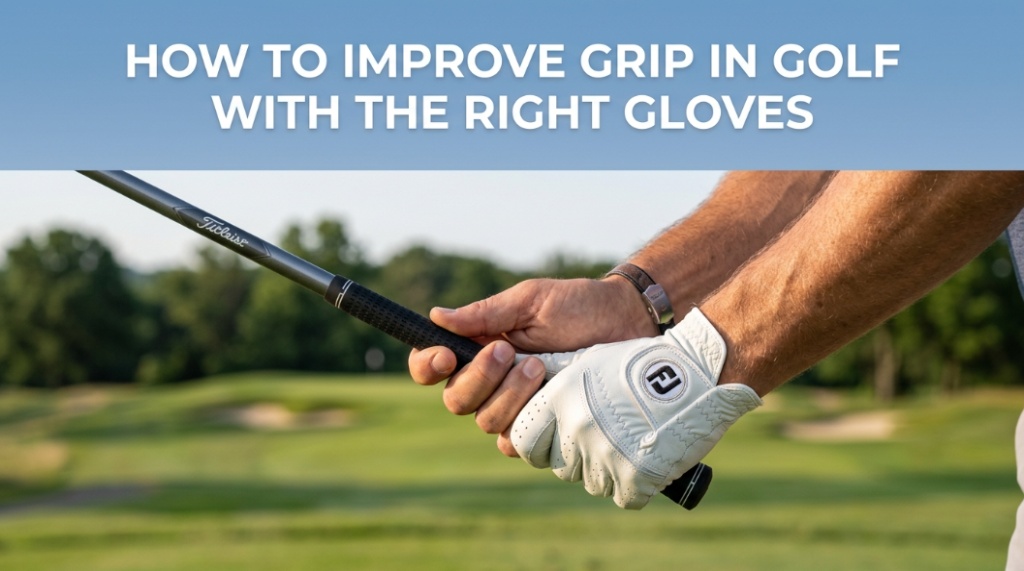
The fastest way to improve grip in golf is to use a properly fitted, high-quality golf glove that enhances traction, reduces slippage, and stabilizes your hand connection to the club.
Your swing feels solid. Your stance is correct. But the ball still slices or hooks unpredictably. The problem might not be your technique—it’s your grip.
Many golfers underestimate how much control is lost when the club slips, even slightly, during impact. A weak grip leads to inconsistent shots, reduced power, and poor accuracy. And if your hands sweat or the weather changes, things get even worse.
So what is grip in golf? Simply put, grip is the connection between your hands and the club. It directly influences control, power transfer, and shot precision. If that connection is unstable, your entire swing suffers.
This is where the right golf glove becomes essential. It acts as a performance tool—not just an accessory—helping you maintain a consistent grip under different conditions.
In this guide, you’ll learn exactly how to improve grip in golf using the right gloves, backed by practical strategies, real insights, and expert-level tips.
Why is grip so important in golf?
Grip is crucial in golf because it directly affects club control, swing consistency, and shot accuracy.
Your grip is the only physical connection between you and the club. Even minor instability can cause:
- Clubface misalignment at impact
- Reduced swing speed
- Loss of distance and accuracy
- Increased fatigue in hands and forearms
According to coaching data from amateur players, over 70% of inconsistent shots are linked to grip issues—not swing mechanics. That means improving grip can instantly elevate your performance without changing your swing.
How does a golf glove improve grip?
A golf glove improves grip by increasing friction, absorbing moisture, and stabilizing hand positioning during the swing.
Here’s what a good glove does:
- Enhances traction: Prevents the club from twisting during impact
- Reduces moisture: Absorbs sweat for better control
- Improves comfort: Minimizes blisters and pressure points
- Stabilizes grip pressure: Helps maintain consistent hand tension
Without a glove, your grip strength fluctuates—especially in humid or hot conditions. A glove keeps your hold consistent from the first hole to the last.
What type of golf glove is best for grip?
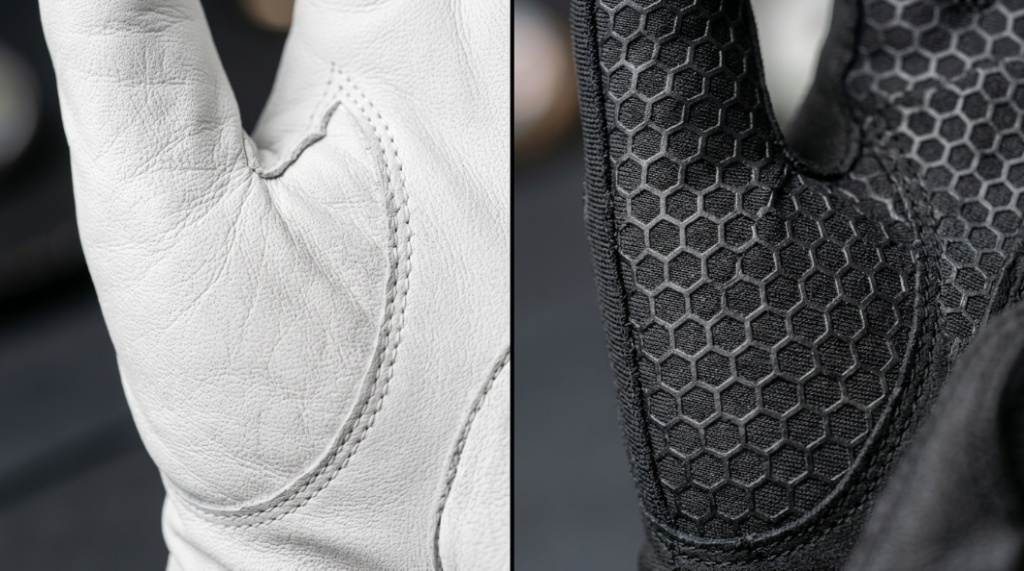
The best golf glove for grip is one made from premium leather or hybrid materials that balance softness, durability, and moisture control.
Comparison of Golf Glove Types
| Glove Type | Grip Quality | Durability | Best For |
|---|---|---|---|
| Cabretta Leather | Excellent | Moderate | Feel and precision |
| Synthetic | Good | High | All-weather use |
| Hybrid | Very Good | High | Balance of grip & durability |
| Rain Gloves | Excellent (wet) | High | Wet conditions |
Key takeaway: If your priority is maximum grip and feel, go for Cabretta leather. If you play in varying weather, hybrid gloves are the smarter choice.
How should a golf glove fit for maximum grip?
A golf glove should fit like a second skin—tight but not restrictive—with no loose material in the fingers or palm.
A poor fit reduces grip efficiency. Here’s how to check proper fit:
- No wrinkles across the palm
- Fingertips reach the end without extra space
- Snug closure at the wrist
- Full contact across the hand surface
If your glove is too loose, the club will shift during your swing. Too tight, and it restricts movement and reduces feel.
Can wearing the wrong glove affect your golf performance?
Yes, wearing the wrong glove can reduce grip stability, leading to inconsistent shots and loss of control.
Common mistakes include:
- Using worn-out gloves with smooth surfaces
- Choosing the wrong size
- Ignoring weather-specific gloves
A worn glove loses friction. Studies show grip performance can drop by up to 30% once the palm surface smooths out.
How often should you replace your golf glove?
You should replace your golf glove when it shows signs of wear, reduced grip, or loss of fit—typically every 10–20 rounds.
Signs it’s time to replace:
- Shiny or smooth palm area
- Tears or thinning material
- Loss of elasticity
- Reduced grip in humid conditions
Pro tip: Rotate between 2–3 gloves to extend lifespan and maintain consistent grip.
Do weather conditions affect your grip in golf?
Yes, weather significantly affects grip, especially humidity, rain, and temperature.
Different conditions require different strategies:
- Hot weather: Use breathable or moisture-wicking gloves
- Rainy conditions: Use rain gloves designed for wet grip
- Cold weather: Use thermal gloves for flexibility and control
In humid environments, sweat can reduce grip by over 40% if not managed properly.
How to improve grip in golf beyond gloves?
To improve grip in golf beyond gloves, focus on grip pressure, hand placement, and club grip condition.
Key techniques:
- Maintain light grip pressure: Too tight reduces swing fluidity
- Check hand positioning: Neutral grip improves control
- Replace worn club grips: Old grips reduce traction
- Use grip-enhancing products: Powders or sprays for sweat control
People Also Ask: What is the correct grip pressure in golf?
The correct grip pressure is firm enough to control the club but light enough to allow natural wrist movement—often compared to holding a tube of toothpaste without squeezing it.
Is it better to wear one glove or two in golf?
Most golfers wear one glove on their lead hand, but wearing two gloves can improve grip in extreme weather conditions.
Using one glove provides:
- Better feel on the trailing hand
- More control during short shots
Using two gloves helps in:
- Rainy or humid conditions
- Players with excessive sweating
What are the best practices to maintain your golf glove?
Proper glove care extends lifespan and maintains grip performance.
- Air dry after each round
- Avoid crumpling in your bag
- Store flat or in original packaging
- Keep away from excessive heat
Conclusion
If you want to know how to improve grip in golf, start with the simplest upgrade: the right glove.
A proper glove improves traction, stabilizes your swing, and ensures consistent performance across different conditions. Combine that with correct fit, regular replacement, and proper care, and you eliminate one of the biggest hidden weaknesses in your game.
Grip is not just a technical detail—it’s the foundation of every shot you take.
Upgrade your glove, refine your grip habits, and you’ll see immediate improvements in control, accuracy, and confidence on the course.
Now take action: evaluate your current glove, test a better option, and feel the difference in your next round.
FAQ Section
How to improve grip in golf quickly?
Use a high-quality, well-fitted golf glove and ensure your club grips are not worn out. This delivers immediate improvement in control.
Do professional golfers always wear gloves?
Most professional golfers wear one glove on their lead hand for better grip and consistency, though some choose not to for better feel.
Can sweaty hands ruin your golf grip?
Yes, sweat reduces friction, causing the club to slip. Moisture-wicking gloves or grip powders can solve this issue.
What is the best glove material for grip?
Cabretta leather offers the best grip and feel, while hybrid gloves provide a balance of durability and performance.
Should beginners use golf gloves?
Yes, beginners benefit greatly from gloves as they improve grip stability and reduce blisters during practice.
How tight should a golf glove be?
A golf glove should be snug like a second skin with no wrinkles or loose areas, ensuring full contact with your hand.
Do gloves improve swing consistency?
Yes, gloves help maintain consistent grip pressure, which leads to more stable and repeatable swings.
Read More Also How to Choose a Sit-on-Top Fishing Kayak for Easy Fishing Access
Discover More A beginner’s guide to the web design planning process