What Is a Transducer and Why Is It Important?
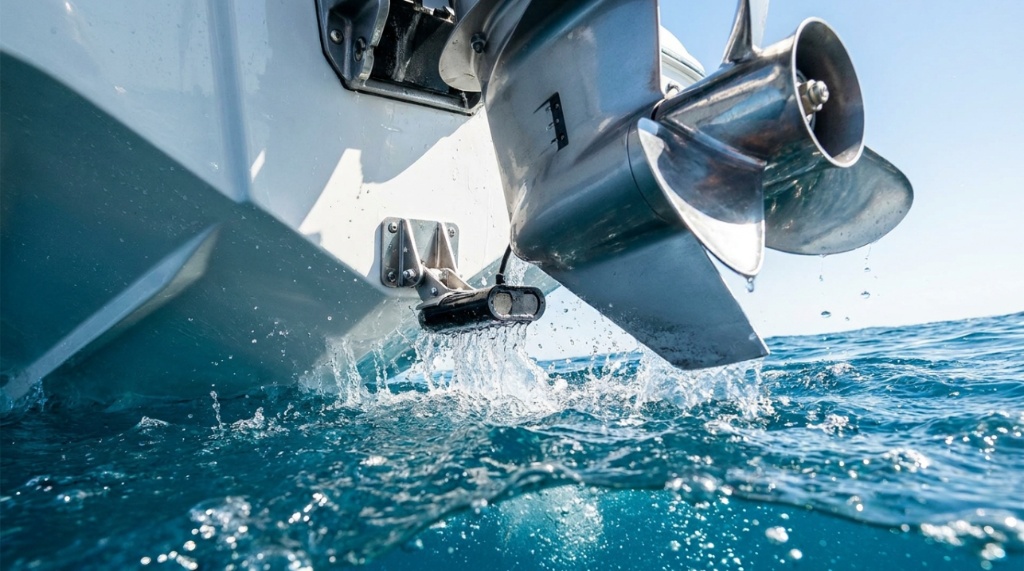
A transducer converts electrical energy from your fish finder into sound waves and vice versa, allowing you to see underwater structures and fish. It’s the component that determines how well your fish finder performs in terms of depth, clarity, and fish detection.
Here’s how it works:
- Sends sound waves: The transducer emits sonar pulses into the water.
- Receives echoes: When these pulses hit an object (like a fish or the bottom), they bounce back to the transducer.
- Converts signals: The transducer converts the returning echoes into electrical signals that your fish finder processes and displays.
Fun fact: The word “transducer” comes from the Latin “transducere,” meaning “to lead across.” It literally translates energy from one form to another.
People also ask: Can I use any transducer with my fish finder?
No. Transducers are not universally compatible. You need to match the transducer’s connector, frequency, and power requirements to your fish finder’s specifications.
What Are the Different Types of Transducers?
Transducers come in various types, each suited for different fishing environments and needs. Here’s a breakdown of the most common types:
| Type | Description | Best For | Pros | Cons |
|---|---|---|---|---|
| Transom Mount | Mounts on the transom (back) of the boat. | Small boats, kayaks, and casual fishing | Easy to install, removable | May lose signal at high speeds |
| Hull Mount | Permanently mounted inside or outside the hull. | Larger boats, serious anglers | Stable, accurate readings | Requires drilling, permanent |
| Trolling Motor Mount | Mounts on the trolling motor. | Bass boats, trolling motor users | Reduces interference, good for shallow water | Limited to trolling motor use |
| Through-Hull | Installed through a hole in the hull. | Offshore, deep-sea fishing | High accuracy, no drag | Complex installation, permanent |
| Portable/Transducer Arm | Clamps or sticks to the side of the boat. | Rental boats, multi-boat use | Versatile, no permanent installation | Less stable in rough water |
| Ice Transducer | Designed for ice fishing, often with a flasher display. | Ice fishing | Compact, optimized for cold water | Limited to ice fishing |
How Do I Choose the Right Frequency for My Transducer?
The frequency of your transducer determines its depth range and level of detail. Higher frequencies provide better resolution but penetrate less deeply, while lower frequencies cover more depth but with less detail.
| Frequency | Depth Range | Best For | Resolution |
|---|---|---|---|
| 50 kHz | Up to 3,000+ ft | Deep water, offshore fishing | Low (broad coverage) |
| 77 kHz | Up to 1,500 ft | Mid-range depth, general fishing | Moderate |
| 83 kHz | Up to 1,000 ft | Mid-range depth, freshwater | Moderate |
| 200 kHz | Up to 600 ft | Shallow water, detailed imaging | High |
| 455/800 kHz | Up to 300 ft | Very shallow water, Side/Down Imaging | Very High |
Pro tip: For versatility, choose a dual-frequency or CHIRP transducer. CHIRP transducers use a range of frequencies to provide better detail and fish separation across all depths.
People also ask: What’s the best frequency for freshwater fishing?
For most freshwater fishing, a **200 kHz transducer** is ideal. It provides high resolution for shallow to mid-depth waters (up to 600 feet), which covers most lakes and rivers.
What Is the Best Cone Angle for My Transducer?
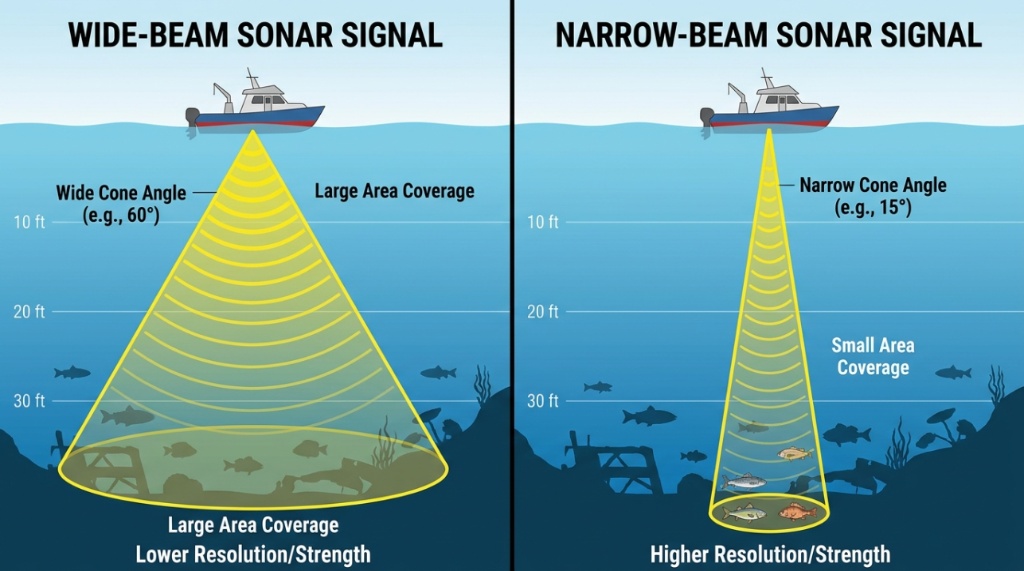
The cone angle determines the width of the sonar beam. A wider cone covers more area but with less detail, while a narrower cone provides more precision. Here’s how to choose the right cone angle for your fishing style:
| Cone Angle | Coverage Area | Best For | Pros | Cons |
|---|---|---|---|---|
| 9–12° | Narrow | Deep water, precise targeting | High detail, accurate depth readings | Less coverage area |
| 16–20° | Moderate | General fishing, mid-depth waters | Balanced coverage and detail | Less precise than narrow cones |
| 24–30° | Wide | Shallow water, broad coverage | Covers more area, good for locating fish | Less detail, harder to pinpoint fish |
| 40–60° | Very Wide | Very shallow water, ice fishing | Maximum coverage | Poor detail, only for very shallow water |
Real-world example: If you’re fishing in a small lake with lots of structure, a **20° cone angle** will give you a good balance of coverage and detail. For deep-sea fishing, a **9° cone angle** will help you target fish more precisely.
How Do I Match a Transducer to My Fish Finder?
To match a transducer to your fish finder, check the connector type, frequency, and power compatibility. Here’s how to ensure a perfect fit:
- Check the connector: Most fish finders use proprietary connectors (e.g., Garmin, Lowrance, Humminbird). Ensure the transducer’s connector matches your fish finder’s port.
- Match the frequency: The transducer’s frequency should be compatible with your fish finder’s capabilities. For example, if your fish finder supports CHIRP, choose a CHIRP transducer.
- Power requirements: Ensure the transducer’s power output (measured in watts RMS) matches or is less than your fish finder’s maximum power rating.
- Mounting compatibility: Choose a transducer that can be mounted in a way that suits your boat (e.g., transom, hull, or trolling motor mount).
- Brand compatibility: Stick to the same brand for your fish finder and transducer to ensure seamless integration. For example, a Garmin fish finder works best with a Garmin transducer.
Pro tip: If you’re unsure, check the manufacturer’s website or consult a marine fish finder expert to find compatible transducers.
What Are the Best Transducers for Marine Fish Finders?
Here are some of the best transducers for marine fish finders, based on performance, compatibility, and user reviews. These models are designed to handle the demands of saltwater fishing.
| Model | Type | Frequency | Cone Angle | Best For |
|---|---|---|---|---|
| Garmin GT52HW-TM | Transom Mount | 50/77/200 kHz | 16°/28° | Versatile, freshwater and saltwater |
| Lowrance TM150 | Transom Mount | 50/83/200 kHz | 16°/28° | Mid-range depth, general fishing |
| Humminbird XNT 9 20 T | Transom Mount | 200 kHz | 20° | Shallow water, detailed imaging |
| Airmar TM260 | Transom Mount | 50/200 kHz | 12°/20° | Deep water, offshore fishing |
| Garmin GT56UHD-TM | Transom Mount | CHIRP (Mid/High) | 16°/24° | CHIRP compatibility, high resolution |
For more options, check out the best transducers for marine fish finders.
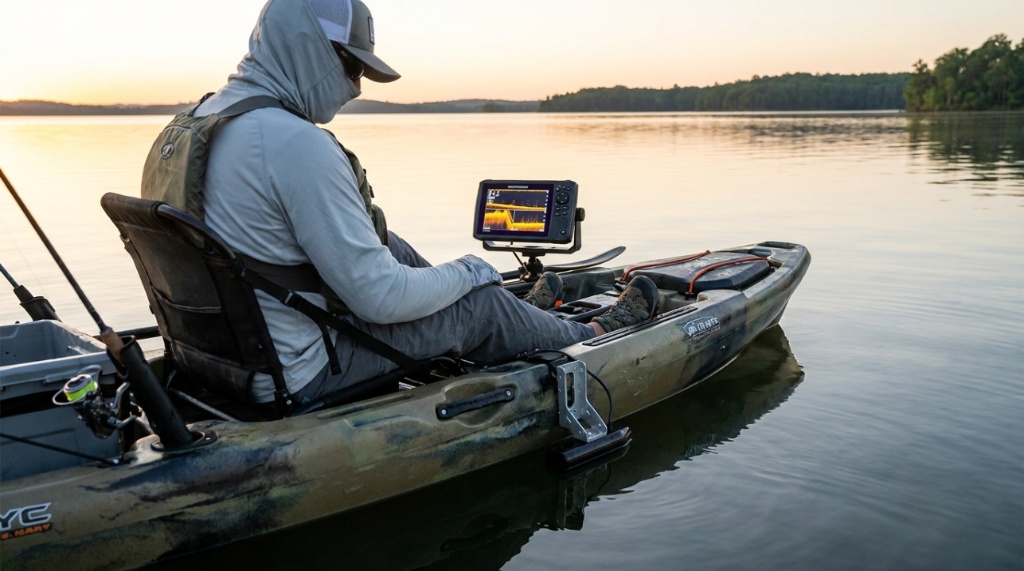
Choosing the perfect sonar setup heavily depends on your watercraft. While powerboats often require permanent through-hull or transom mounts, minimalists and tournament anglers alike are shifting toward a fishing kayak for easy fishing access to tight, shallow structures. These specialized kayaks allow you to mount lightweight, versatile transducers right over the side or through a scupper hole, giving you identical fish-finding power without the bulk of a massive vessel.
Frequently Asked Questions
Can I use a freshwater transducer in saltwater?
No. Freshwater transducers are not designed to handle the corrosive effects of saltwater. Always use a saltwater-rated transducer for marine fishing.
How do I know if my transducer is working properly?
Test it in shallow water. Drop the transducer in a known depth (e.g., 10 feet) and check if the fish finder displays the correct depth. If it’s off by more than a few inches, there may be an issue with the transducer or its installation.
What’s the difference between a single-frequency and dual-frequency transducer?
Single-frequency transducers use one frequency, while dual-frequency transducers can switch between two (e.g., 50 kHz and 200 kHz). Dual-frequency transducers offer more versatility, allowing you to adjust for different depths and conditions.
Do I need a special transducer for ice fishing?
Yes. Ice fishing transducers are designed to work in cold water and often come with a flasher display for real-time readings. They typically have a wider cone angle (e.g., 20–40°) to cover more area under the ice.
How do I clean my transducer?
Rinse it with freshwater after each use in saltwater. Use a soft brush or cloth to remove any buildup of algae, barnacles, or salt residue. Avoid using harsh chemicals, as they can damage the transducer.