

You spend hundreds — sometimes thousands — of dollars on a surfboard. But a lot of surfers unknowingly damage their boards while they’re just sitting in storage. Heat, UV light, moisture, and pressure are silent board killers. This guide will show you exactly how to protect your investment with the right surfboard storage solutions and habits.
The 4 Main Enemies of Indoor Board Storage
1. Heat
Heat is the #1 cause of surfboard damage in storage. It causes:
- Delamination — the fiberglass skin separates from the foam core
- Warping — the rocker and outline change shape
- Outgassing — the foam expands and pushes resin away from the surface
Danger zones: Garages, car trunks, attics, and rooms facing direct sun. Interior temperatures in parked cars or unventilated garages can exceed 140°F in summer.
2. UV Light
Even indirect sunlight through a window causes UV damage over time:
- Yellowing of the foam and resin
- Weakening of the fiberglass
- Fading of custom artwork or tints
3. Pressure
Incorrect storage puts concentrated pressure on specific points of the board:
- Leaning against a wall puts pressure on the rail at one point
- Lying flat on a hard floor can dent the bottom
- Narrow mount arms concentrate weight on a small area
4. Moisture
Untreated dings combined with moisture cause:
- Foam rot — water gets into cracks and breaks down the foam core
- Delamination — waterlogged foam pushes the skin apart
- Mold and odor — especially in humid climates
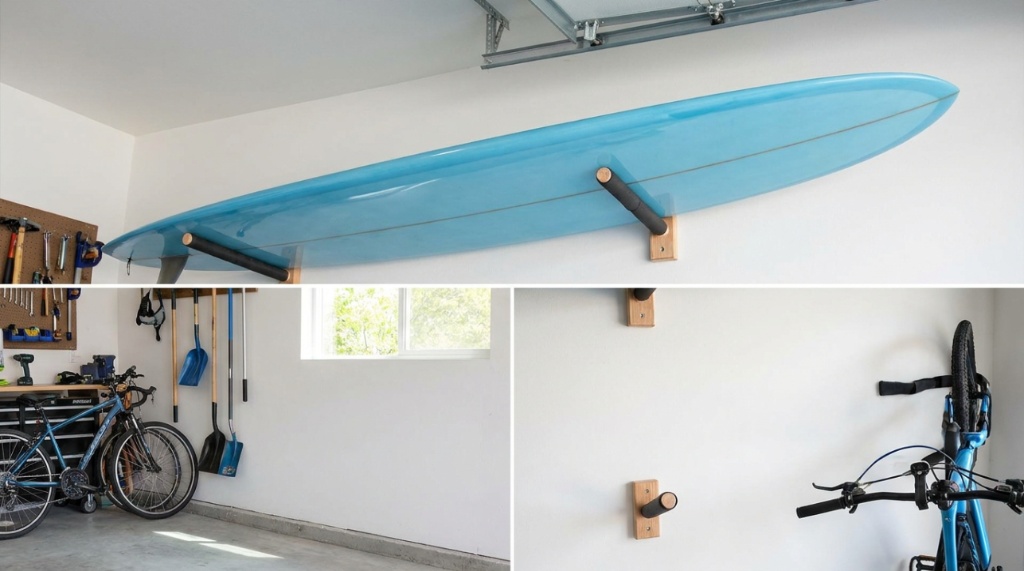
Best Practices for Indoor Surfboard Protection
Always Rinse Before Storing
Salt is corrosive. After every session, rinse your board with fresh water — pay attention to:
- The fin boxes (salt crystalizes inside)
- Any dings or cracks (flush them out completely)
- The leash plug area
- The tail pad
Let the board air dry completely before mounting on your rack. Never store a wet board in a bag or enclosed space.
Choose the Right Surfboard Storage Solutions
The way you store your board matters as much as where you store it:
- Wall mount — best option; keeps board horizontal, pressure evenly distributed
- Board bag on rack — adds UV and light scratch protection
- Floor storage — only acceptable with proper padding underneath
- Vertical against wall — use a padded base; avoid bare wall contact
Treat Your Dings Immediately
A ding left untreated turns into a water damage disaster. Every time:
- Check your board for new dings after each session
- If you find a crack, dry the board completely
- Apply a temporary ding repair stick or UV resin as soon as possible
- Get a proper repair done before your next session
Never store a board with an open ding — water will get in.
Use a Board Bag or Sock
Even for indoor storage, a board bag or sock offers:
- UV protection from windows
- Dust protection
- Scratch protection from accidental bumps
- Light temperature regulation
A simple $15–$25 board sock is one of the cheapest and most effective forms of surfboard protection storage you can use.
Best Storage Locations Ranked
| Location | Rating | Notes |
|---|---|---|
| Climate-controlled bedroom | ⭐⭐⭐⭐⭐ | Ideal — stable temp, no direct sun |
| Spare room away from windows | ⭐⭐⭐⭐ | Good — use a board sock |
| Shaded garage | ⭐⭐⭐ | OK — watch for heat spikes in summer |
| Outdoor shed | ⭐⭐ | Risky — moisture and temp fluctuations |
| Sunny garage | ⭐ | Avoid — heat and UV damage |
| Car trunk | ❌ | Never long-term |
Monthly Maintenance Checklist
Keep your board in top shape with this quick monthly routine:
- Inspect for new dings or cracks
- Check fin boxes for looseness
- Wipe down with a damp cloth
- Remove old wax and reapply fresh wax
- Check mount arms for padding wear
- Rotate board position if needed (flip top-to-bottom)
Signs Your Board Has Already Been Damaged by Storage
- Soft spots when you press the deck — foam rot underneath
- Bubbles or bumps on the surface — delamination
- Yellow tinge spreading through the foam — UV damage
- Musty smell — moisture damage inside
- Altered rocker — heat warping
If you notice any of these, consult a local shaper or surf shop for a professional assessment before getting back in the water.
Finding the perfect indoor storage setup keeps your gear pristine, but matching that setup to the right board is just as important. If you are looking to expand your quiver or need a board tailored to your current skill level, check out our comprehensive Best Surfboards Reviews & Buyer’s Guide to discover top-rated shapes and constructions built to last.
Conclusion
Your surfboard deserves proper care on land just as much as it delivers performance in the water. By investing in the right surfboard storage solutions, keeping your board away from heat and UV light, treating dings immediately, and following a simple maintenance routine, you can extend the life of your board by years. Store it right, and it’ll always be ready when the waves call.