Golf is one of the most rewarding sports you can take up. However, it can also feel confusing at first — especially when you walk into a golf shop and see wall after wall of clubs. There are so many shapes, sizes, and price points. Knowing where to start is not always easy.
The good news is that choosing the right clubs does not have to be complicated. Once you understand the basics, the decision becomes much clearer. This guide will walk you through everything you need to know. Whether you are a complete beginner or an experienced player looking to upgrade, you will find practical advice here.
Why the Right Club Makes a Difference
Using the wrong club for your skill level can slow your progress. It can also make the game feel harder than it needs to be. Beginners who use clubs designed for professionals often struggle more than necessary. The club simply does not match their swing speed or technique.
On the other hand, when you use clubs suited to your level, the game opens up. You hit the ball more consistently. Your confidence grows. Additionally, the right equipment helps you build better habits from the very start. It sets you up for long-term improvement.
Therefore, choosing well from the beginning is one of the smartest investments a golfer can make.
Understanding the Main Golf Club Types
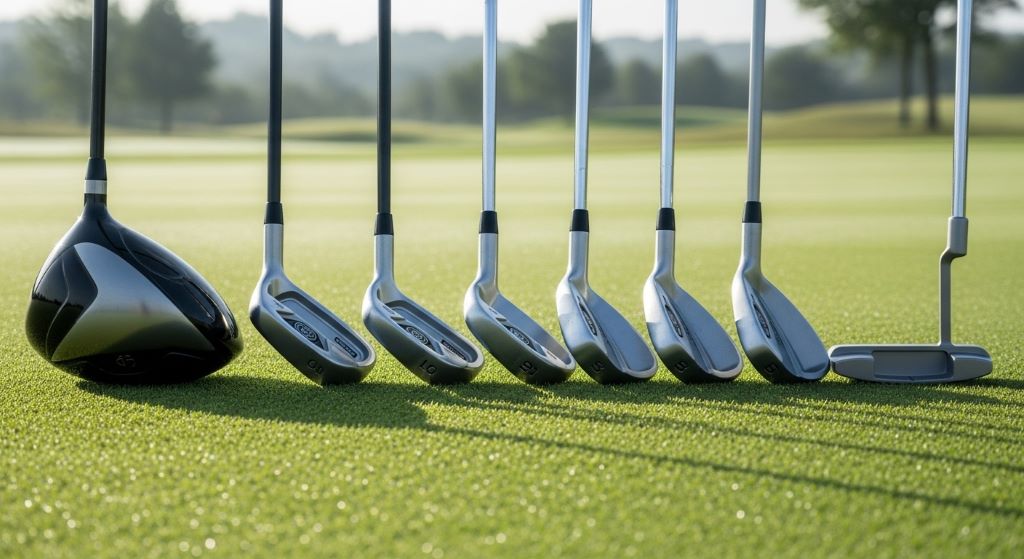
Before you buy anything, it helps to understand what each club does. There are several golf club types used in the game, and each one serves a specific purpose on the course.
Woods
Woods are the longest clubs in the bag. They are used for hitting the ball over long distances. The driver is the most well-known wood. It is typically used on the tee box at the start of each hole. Fairway woods are slightly shorter and more versatile. They can be used both off the tee and from the fairway.
Woods have large, rounded heads. This design helps launch the ball high and far. However, they require a smooth, controlled swing to use effectively.
Irons
Irons are the workhorses of the golf bag. They cover a wide range of distances and situations. Most sets include irons numbered from 3 to 9, plus a pitching wedge. Lower-numbered irons hit the ball farther but are harder to control. Higher-numbered irons are shorter and easier to use accurately.
When thinking about iron vs driver performance, the key difference is distance versus control. Drivers are built for maximum distance. Irons are built for precision and versatility. Beginners often find irons easier to manage during the early stages of learning.
Wedges
Wedges are a type of iron with extra loft. They are designed for short shots around the green. Common wedges include the pitching wedge, sand wedge, and lob wedge. Each one serves a slightly different purpose. Wedges are essential for getting out of tricky spots and finishing holes well.
Putters
The putter is used on the green to roll the ball into the hole. It looks very different from all other clubs. The head is flat, and the shaft is shorter. Putting is a skill on its own, and having a putter that feels comfortable in your hands makes a real difference.
Hybrids
Hybrids are a relatively newer addition to the golf world. They combine features of both woods and irons. Many golfers find them easier to hit than long irons. Therefore, hybrids have become a popular choice, especially for beginners and mid-level players.
Choosing Clubs Based on Your Skill Level
Now that you understand the different club types, it is time to match them to your experience. Your skill level plays a huge role in what will work best for you.
Clubs for Beginners
If you are just starting out, simplicity is your best friend. You do not need a full set of 14 clubs right away. In fact, starting with fewer clubs helps you focus on learning the basics without feeling overwhelmed.
A good beginner set typically includes a driver, a fairway wood, a hybrid, a few irons (6 through 9), a pitching wedge, and a putter. This gives you enough variety to play a full round while keeping things manageable.
Additionally, beginners benefit greatly from game-improvement irons. These have wider soles and larger club faces. They are more forgiving, which means off-center shots still travel reasonably well. This forgiveness keeps frustration low while you are still developing your swing.
When it comes to iron vs driver use, beginners should not shy away from the driver. However, it is smart to practice with a 3-wood or hybrid from the tee first. These clubs are shorter and easier to control. They help you build confidence before stepping up to a full driver.
Clubs for Intermediate Players
Once you have played for a year or two and your swing has become more consistent, you can start thinking about a more complete set. Intermediate players often benefit from adding a few more irons and experimenting with different wedges.
At this stage, you may want to replace some hybrids with longer irons. However, there is no rush. If hybrids are still working well for you, keep using them. The goal is to play your best game, not to follow a fixed formula.
Intermediate players also start to notice differences in shaft flex and club weight. Stiffer shafts suit faster swing speeds. More flexible shafts suit slower swings. Therefore, getting a basic club fitting at this stage can make a noticeable difference in your performance.
Clubs for Advanced Players
Experienced golfers have specific preferences. They often choose clubs that allow for greater shot shaping and control. This sometimes means less forgiving irons with smaller club faces. Advanced players have the skill to use these clubs effectively.
At this level, every detail matters. The loft angle, shaft weight, grip size, and club length all play a role. Most advanced players invest in professional club fittings. A custom fitting ensures every club in the bag is perfectly matched to their swing.
Advanced players also tend to carry a wider variety of wedges. Having three or four wedges allows for more precise distances and shot types around the green. This versatility can shave several strokes off a round.

The Iron vs Driver Debate: What Should You Prioritize?
This is one of the most common questions new golfers ask. Should you focus more on mastering your irons or your driver? The answer depends on your goals and current level.
The driver gets a lot of attention. Hitting long drives is exciting and can give you a real advantage on long holes. However, statistics show that most golfers lose more strokes around the green than off the tee. Therefore, improving your iron play and short game often has a bigger impact on your overall score.
That said, being wildly inconsistent with your driver also costs strokes. If you spend your time hunting for lost balls in the rough, your score will suffer. So both clubs deserve attention. A balanced practice routine that includes both driver and iron work is usually the smartest approach.
For beginners, spending extra time with mid-irons — the 6, 7, and 8 — is a great use of practice time. These clubs are forgiving, versatile, and build a solid foundation for the rest of your game.
Key Factors to Consider When Buying Golf Clubs
Beyond skill level, a few other factors should guide your buying decision.
Budget
Golf clubs range from very affordable to extremely expensive. A solid beginner set can be found for a few hundred dollars. However, you can also spend thousands on a premium custom-fitted set. Know your budget before you shop, and remember that price does not always equal performance.
New vs Used Clubs
Buying used clubs is a smart option, especially for beginners. Golf clubs hold up well over time. A quality set of used clubs from a reliable brand will serve a beginner just as well as a brand-new budget set. Additionally, used clubs allow you to try different brands and styles without a large financial commitment.
Getting a Club Fitting
A club fitting session is one of the best investments a golfer can make. A trained fitter will analyze your swing and recommend clubs that match your specific needs. Many golf shops and driving ranges offer fittings at low or no cost. Therefore, it is worth booking one before making a major purchase.
Brand and Reputation
Stick with well-known, reputable brands when possible. Companies like Callaway, TaylorMade, Ping, Titleist, and Cleveland have long track records of producing quality clubs at various price points. Reading reviews and asking for recommendations from other golfers can also help you make a confident choice.
Building Your Bag Over Time
You do not have to buy everything at once. Many golfers build their bag gradually. Start with a basic starter set and then add or replace clubs as your game develops. This approach saves money and ensures each new club purchase is actually needed.
Additionally, your needs will change as you improve. A club that was perfect for you as a beginner may not suit your game two years later. Therefore, think of your golf bag as a living collection that grows and evolves with your skills.
Conclusion
Choosing the right golf clubs comes down to three main things: understanding your skill level, knowing the different golf club types available, and matching your equipment to your game. Beginners should prioritize forgiving, easy-to-hit clubs and focus on building a consistent swing. Intermediate players can start fine-tuning their sets and exploring custom options. Advanced golfers benefit most from precision fitting and highly specialized equipment.
The iron vs driver question is not one or the other — both deserve attention in your practice and play. However, for most golfers, improving iron play and the short game will have the biggest impact on scores.
Take your time, do your research, and do not be afraid to ask for help at your local golf shop. The right clubs, matched to your level, will make every round more enjoyable and help you improve faster than you ever expected.
Frequently Asked Questions
How many golf clubs should a beginner start with?
Beginners do not need a full set of 14 clubs. Starting with 8 to 10 clubs — including a driver, a fairway wood or hybrid, a few irons, a wedge, and a putter — is more than enough. A smaller set keeps things simple while you are learning the basics.
What is the difference between an iron and a driver?
A driver is designed for maximum distance and is typically used off the tee. An iron is used for a wide range of mid-course shots and offers more precision and control. The iron vs driver choice on any given shot depends on the distance needed and the situation on the course.
Are expensive golf clubs worth it for beginners?
Not necessarily. Beginners benefit most from forgiving, game-improvement clubs, which do not have to be expensive. A quality mid-range set will serve a new golfer just as well as a premium set. Save the investment in high-end clubs for when your swing is more developed.
When should I get a golf club fitting?
Ideally, get a fitting as soon as you are ready to invest in a proper set. Even beginners can benefit from a basic fitting that checks shaft length and flex. Intermediate and advanced players should definitely get fitted before making any significant club purchase.
What golf club types are best for women beginners?
Women beginners typically benefit from lighter clubs with more flexible shafts. Many brands offer women-specific club lines designed for slower swing speeds. Game-improvement irons, hybrids, and lightweight fairway woods are all excellent choices for women who are new to the game.
Related Topics:
Jacksonville Skateboard Shopping Guide And Reviews: Top Spots, Honest Reviews, and Expert Tips for 2025