

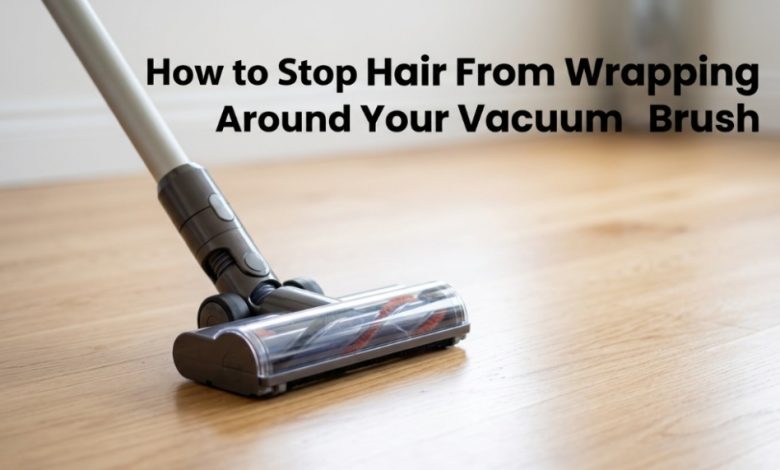
Hair wrapping around a vacuum brush is usually caused by long strands getting trapped inside the brushroll during rotation. The most effective solution is using a tangle-free vacuum with advanced brushroll technology, combined with proper cleaning habits and the right vacuum settings.
Why Does Hair Keep Wrapping Around Vacuum Brushes?
Hair wraps around vacuum brushes because rotating brushrolls create friction that pulls strands tightly around the roller instead of directing them into the suction pathway.
If you vacuum frequently and still find yourself cutting tangled hair from the brush every week, you are not alone. Pet owners, households with long hair, and carpet-heavy homes deal with this constantly. According to consumer appliance reports, hair tangling is one of the top maintenance complaints among vacuum users.
The problem gets worse because wrapped hair reduces suction efficiency, strains the motor, and can permanently damage the brush motor over time. Many users think poor suction is the main issue, but the real culprit is often a clogged or tangled brushroll.
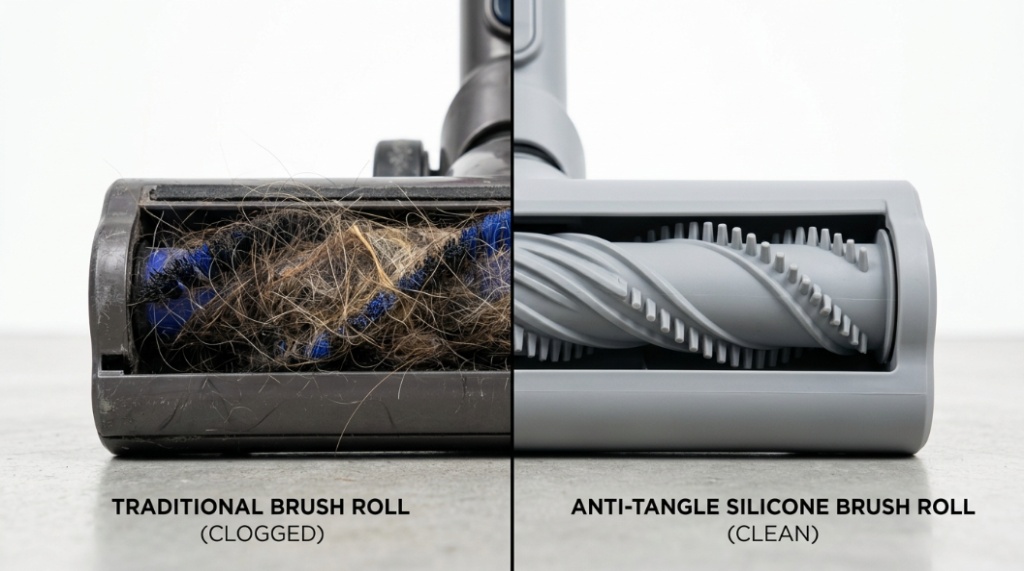
Modern vacuum manufacturers now design anti-tangle systems specifically to address this issue. Newer brushroll technology uses fins, combs, rubber rollers, or self-cleaning systems that actively prevent strands from wrapping tightly around the brush.
Understanding why it happens is the first step toward choosing the right solution.
What Is a Tangle-Free Vacuum?
A tangle-free vacuum is a vacuum cleaner designed with brushroll technology that minimizes or prevents hair from wrapping around the roller during cleaning.
Traditional vacuums use bristle brushes that easily trap long hair, pet fur, and fibers. Tangle-free models use advanced engineering to redirect hair into the dustbin instead of allowing it to coil around the brush.
Common anti-tangle features include:
- Rubberized brushrolls
- Self-cleaning brush systems
- Hair removal combs
- Dual roller systems
- Anti-wrap fins
- Detachable brushrolls for easier cleaning
Brands like Dyson, Shark, Bissell, and Samsung have invested heavily in anti-hair-wrap systems because consumers consistently rank hair tangling as a major frustration.
For homes with pets, long hair, or thick carpeting, investing in better brushroll technology can dramatically reduce maintenance time.
Which Brushroll Technology Works Best for Hair?
The best brushroll technology for preventing hair wrap is a self-cleaning or rubberized brushroll system that actively separates and redirects hair before tangling occurs.
Not all anti-tangle systems perform equally. Some work better on pet hair, while others excel with long human hair.
| Brushroll Technology | How It Works | Best For | Maintenance Level |
|---|---|---|---|
| Rubber Fins | Push hair directly into suction path | Pet hair | Low |
| Self-Cleaning Brushroll | Built-in comb removes hair continuously | Long hair | Very Low |
| Dual Brushroll System | Separates debris and hair collection | Mixed flooring | Medium |
| Traditional Bristle Roll | Uses spinning bristles | Deep carpet cleaning | High |
| Soft Roller Technology | Uses fabric roller instead of stiff bristles | Hardwood floors | Low |
Self-cleaning systems currently offer the best overall performance for reducing maintenance. Shark’s Zero-M technology and Dyson’s anti-tangle motorbar systems are good examples of this evolution.
How Can You Stop Hair From Wrapping Around a Vacuum Brush Immediately?
You can immediately reduce hair tangling by cleaning the brushroll regularly, lowering brush height correctly, vacuuming slowly, and removing excess hair from floors before vacuuming.
Even without upgrading your vacuum, a few adjustments can significantly reduce tangles.
1. Clean the Brushroll Weekly
Hair accumulation gets worse over time. A small tangle quickly becomes a tightly wound knot that restricts rotation.
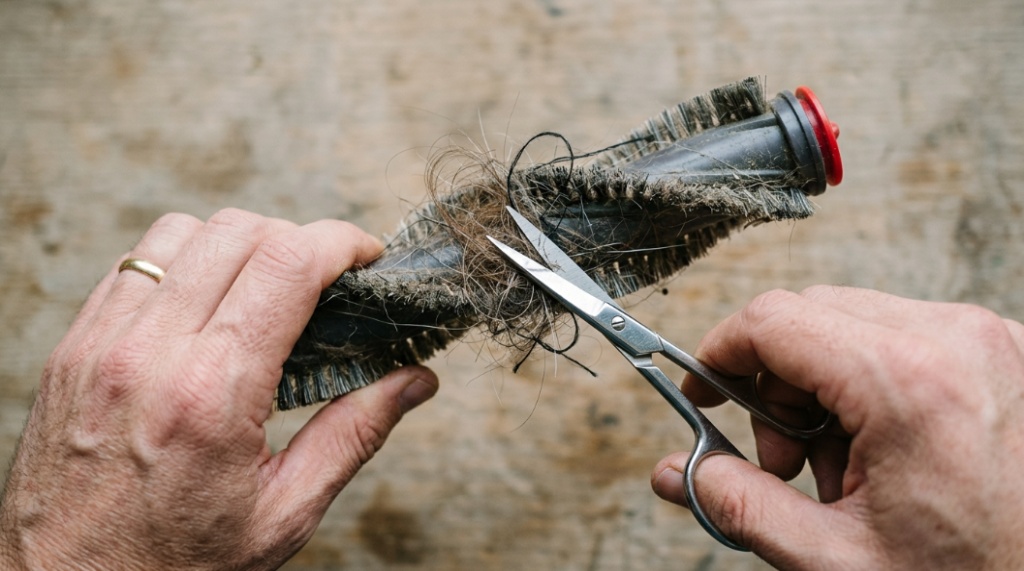
Use scissors or a seam ripper to cut trapped hair along the roller groove. Many vacuums now include cleaning tools specifically for this purpose.
2. Vacuum Slowly
Moving too quickly forces long strands into the roller before suction can pull them inward.
Slow passes allow airflow to lift debris more effectively.
3. Reduce Hair Build-Up Before Vacuuming
If possible, collect visible clumps of hair manually first.
This is especially helpful in bathrooms, bedrooms, and pet sleeping areas.
4. Adjust Brush Height Correctly
If the brush sits too low on thick carpet, hair wraps more aggressively around the roller.
Use the proper carpet height setting to reduce friction.
5. Empty the Dustbin Frequently
Reduced airflow causes hair to remain trapped around the brush instead of entering the collection chamber.
Maintaining strong suction improves overall hair pickup efficiency.
Are Bagless Vacuums Better for Hair Management?
Bagless vacuums often perform better for visible maintenance because users can monitor hair buildup more easily, but performance depends more on brushroll design than dust collection style.
Many consumers assume bagged vacuums clog less with hair. In reality, modern anti-tangle systems matter more than whether the vacuum uses bags.
Bagless models provide advantages such as:
- Transparent dustbin monitoring
- Easier debris disposal
- Lower long-term maintenance costs
- Convenient filter access
However, bagged vacuums still excel for allergy control because they contain fine dust more effectively.
If your main concern is hair wrapping, prioritize brushroll technology over bag type.
Do Robot Vacuums Handle Hair Better?
Some robot vacuums now handle hair exceptionally well thanks to rubber roller systems and self-emptying technology, but cheaper models still struggle with long strands.
Robot vacuums have improved dramatically over the past five years. Earlier models frequently jammed due to tangled hair.
Newer systems from brands like iRobot and Roborock use:
- Rubber extractors instead of bristles
- Dual anti-tangle rollers
- Automatic brush lifting
- Self-emptying docking stations
- AI obstacle detection
Households with pets often benefit from daily automated cleaning because hair accumulation never reaches heavy levels.
However, very long human hair can still occasionally wrap around side brushes and wheel axles.
What Floors Cause the Worst Hair Tangles?
Medium-pile carpets and rugs usually create the worst hair tangles because fibers increase friction and trap strands near the rotating brush.
Different surfaces affect brushroll performance differently.
High-Risk Surfaces
- Medium-pile carpet
- Area rugs
- Shag rugs
- Pet bedding
Lower-Risk Surfaces
- Hardwood floors
- Tile flooring
- Laminate
- Vinyl flooring
Soft rollers and rubberized systems tend to perform better on hard floors because less friction occurs between the roller and surface.
If your home contains mostly carpet, prioritize strong anti-wrap brushroll technology over lightweight design.
How Often Should You Clean a Vacuum Brushroll?
Most households should clean vacuum brushrolls every one to two weeks, while pet-heavy homes may require cleaning every few days.
Maintenance frequency depends on:
- Number of pets
- Hair length in household
- Carpet coverage
- Vacuum usage frequency
Ignoring maintenance causes:
- Reduced suction
- Motor overheating
- Belt damage
- Burning smells
- Reduced cleaning performance
Some manufacturers recommend monthly cleaning, but real-world usage often requires more frequent inspection.
A quick five-minute check can extend vacuum lifespan significantly.
Can Pet Hair Damage Vacuum Motors?
Yes, excessive pet hair buildup can strain brush motors, block airflow, and shorten the lifespan of a vacuum cleaner.
Pet hair is particularly problematic because it combines with dust and oils to create dense clogs.
Common warning signs include:
- Burning odors
- Loud brush noises
- Reduced roller spinning
- Frequent automatic shutoffs
- Overheating
Modern vacuums often include thermal protection systems that temporarily shut down the machine to prevent permanent damage.
Using a vacuum designed specifically for pet hair dramatically reduces long-term wear.
Which Vacuum Features Matter Most for Long Hair?
The most important features for long hair are anti-wrap brushrolls, strong suction power, removable rollers, and easy maintenance access.
When shopping for a vacuum, many users focus only on suction ratings. But for hair-heavy households, maintenance design matters just as much.
Most Important Features
- Self-cleaning brushroll
- Anti-tangle fins
- High airflow suction
- Easy-access roller removal
- HEPA filtration
- Multi-surface compatibility
- Pet hair attachments
Features That Matter Less
- Extra LED lights
- Smartphone apps
- Voice assistant integration
- Ultra-high dustbin capacity
Consumers often overspend on smart features while ignoring maintenance-focused engineering.
A simple tangle-free brushroll often provides more practical value than expensive automation features.
Are Cordless Vacuums Good for Hair Pickup?
Modern cordless vacuums can handle hair extremely well if they include advanced brushroll technology and strong airflow systems.
Earlier cordless models struggled with sustained suction. That has changed significantly due to newer battery and motor technologies.
Advantages of cordless vacuums include:
- Quick daily cleaning
- Easy maneuverability
- Fast spot-cleaning access
- Convenient stair cleaning
However, cheaper cordless vacuums often sacrifice airflow strength.
If your home has pets or long hair, choose a model with:
- At least 40–60 minutes runtime
- Motorized anti-tangle head
- Cyclonic filtration
- High torque motor
Premium cordless vacuums now rival traditional uprights for hair management.
What Are the Best Habits for Keeping Vacuum Brushes Tangle-Free?
The best long-term strategy combines proper cleaning habits, routine maintenance, and using a vacuum built for hair-heavy environments.
Simple habits make a huge difference.
- Vacuum high-hair areas daily
- Inspect brushroll weekly
- Replace filters regularly
- Remove visible hair clumps first
- Store vacuum in dry conditions
- Check roller bearings periodically
- Avoid overfilling dustbins
Many users blame vacuums for poor performance when maintenance is the real issue.
Consistent upkeep keeps airflow strong and reduces brush stress dramatically.
Conclusion: How Can You Finally Stop Hair From Wrapping Around Your Vacuum Brush?
The most effective way to stop hair from wrapping around your vacuum brush is combining a tangle-free vacuum with advanced brushroll technology and consistent maintenance habits.
Hair tangling is more than a small annoyance. It reduces suction, damages components, increases maintenance time, and shortens vacuum lifespan. Fortunately, modern vacuum engineering has improved dramatically. Self-cleaning brushrolls, rubber rollers, anti-wrap fins, and high-efficiency suction systems now solve many of the problems older vacuums struggled with.
If your current vacuum constantly clogs with hair, focus on practical performance features rather than flashy marketing claims. A vacuum built specifically for pet hair and long strands will save time, reduce frustration, and improve overall cleaning efficiency.
Routine maintenance still matters. Even the best anti-tangle systems perform better when cleaned regularly.
Choosing the right brushroll technology today can eliminate one of the most common vacuum problems for years to come.
Frequently Asked Questions About Hair Wrapping Around Vacuum Brushes
Why does hair wrap around vacuum rollers so quickly?
Hair wraps quickly because rotating brushrolls create friction that coils strands tightly around the roller before suction can pull them into the vacuum chamber.
Do anti-tangle vacuums really work?
Yes. Modern anti-tangle vacuums significantly reduce hair wrapping by using rubber fins, self-cleaning combs, or specialized airflow systems that redirect hair into the dustbin.
What is the best vacuum type for pet hair?
Vacuums with self-cleaning brushrolls, strong suction, HEPA filtration, and anti-wrap technology usually perform best for pet hair management.
How do I remove stuck hair from a vacuum brush?
Turn off the vacuum, remove the brushroll if possible, and cut trapped hair using scissors or a seam ripper along the cleaning groove.
Can tangled hair ruin a vacuum cleaner?
Yes. Severe tangles can block airflow, strain motors, overheat belts, and reduce overall vacuum lifespan if ignored for long periods.
Are rubber vacuum rollers better than bristle brushes?
Rubber rollers generally resist hair tangles better than traditional bristle brushes because hair slides off more easily instead of getting trapped.
How often should vacuum filters be cleaned?
Most filters should be cleaned every one to three months depending on usage, pets, and manufacturer recommendations.
Related Topics
Discover: How to Find the Best Versace Perfume for Women (Top Elegant Picks 2026)