
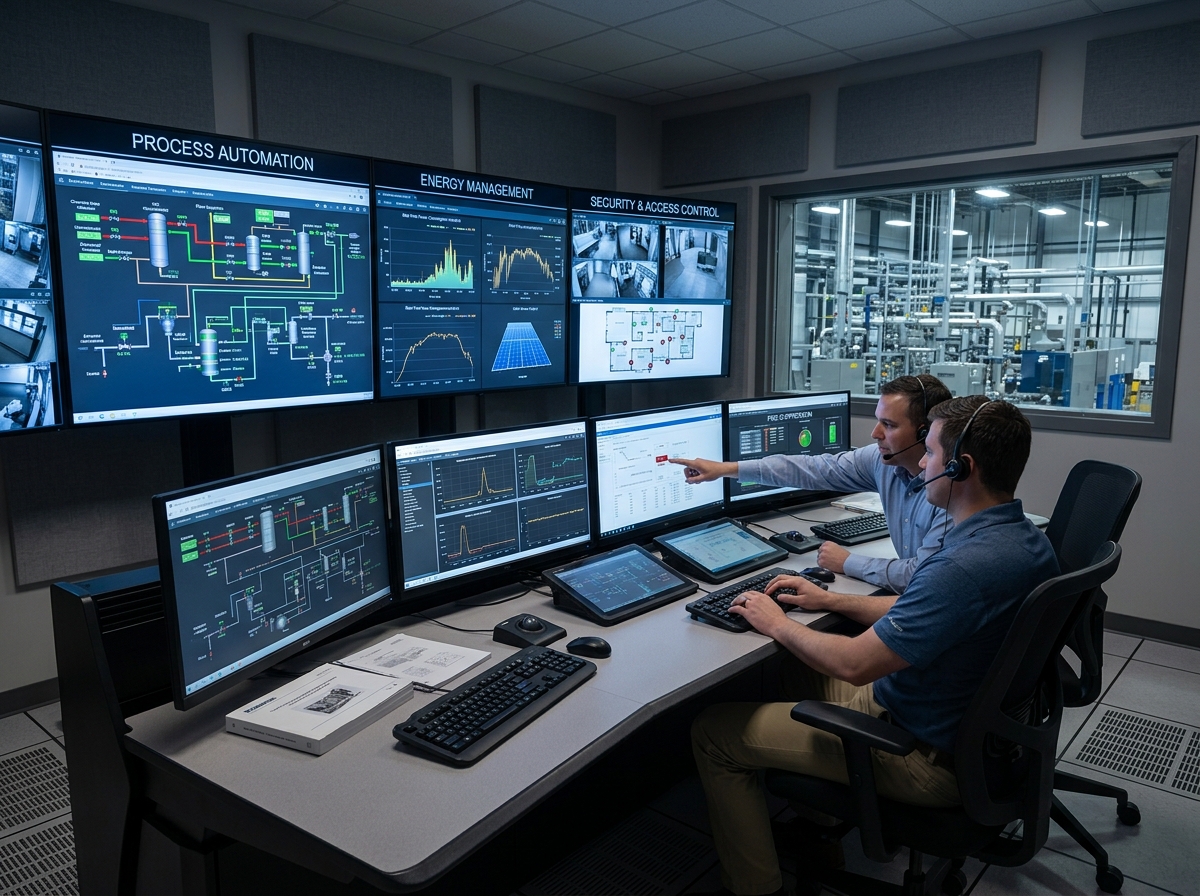
Factories no longer run well when every machine operates like an island. Motors, sensors, conveyors, pumps, valves, robots, panels, and software all need to communicate so production stays accurate, safe, and efficient. Integrated control systems bring those pieces together, giving plants a clearer way to manage equipment from one connected control environment.
Defining Integrated Control Systems as a Single Digital Brain
Integrated control systems combine hardware, software, sensors, controllers, operator screens, and communication networks into one coordinated automation structure. Instead of having separate machines controlled by separate panels with little shared information, the system allows equipment to exchange data and respond to commands in a more organized way. This makes the plant easier to monitor because operators can see machine status, alarms, performance data, and process conditions from a central point.
Modern facilities use these systems to control everything from simple conveyor movement to complex process lines. A well-designed system can start equipment in the correct order, adjust speeds, track temperatures, monitor pressure, and stop machinery when unsafe conditions appear. Industrial automation system integrators help design these connections so each part of the operation works with the larger production goal.
How Centralized Networks Connect Mismatched Hardware Components
Older plants often contain equipment from different manufacturers, installed at different times, with different control languages. One machine may run on a PLC, another may use older relays, while a newer line may include smart drives or advanced sensors. Centralized networks help those mismatched components communicate through properly designed interfaces, gateways, and control architecture.
Practical integration does not always mean replacing every machine. Control integrators may keep useful equipment in place while updating communication paths, panels, software, and monitoring tools. This approach can reduce downtime while giving the facility a more connected system that supports better visibility and control.
The Way Sensors Gather Real-Time Performance Data Across Lines
Sensors act like the eyes and ears of an integrated system. They measure temperature, pressure, flow, speed, position, vibration, weight, level, and other operating conditions throughout the plant. That real-time data gives operators and controllers the information needed to make fast decisions.
Accurate sensor data also helps maintenance teams spot problems earlier. A motor drawing unusual current, a valve responding slowly, or a temperature drifting outside range may signal trouble before a full breakdown occurs. Industrial control systems companies often design sensor networks to improve both production control and preventive maintenance.
Why Consolidating Your Control Panels Eliminates Human Error
Multiple control panels can make daily operation harder than it needs to be. Workers may have to walk across the floor to check different machines, compare separate readings, or remember different startup steps for each system. More manual steps create more chances for missed settings, wrong sequences, or delayed responses.
Consolidated control panels simplify that process. Operators can manage connected equipment through a cleaner interface with clear screens, alarms, and commands. An experienced integrator in control system design can reduce confusion by grouping related controls in a way that matches how the plant actually runs.
How Automated Relays Translate Commands to Individual Machines
Automated relays and control outputs help turn digital instructions into physical machine actions. A controller may decide to start a motor, open a valve, energize a pump, trigger a light, or stop a conveyor based on sensor input and programmed logic. These commands move through relays, contactors, drives, and other devices that control real equipment.
Reliable command translation matters because timing can affect safety and product quality. If one machine starts too early or another stops too late, the whole line may suffer. Integrated control systems help coordinate those actions so machines respond in the correct order and at the correct moment.
The Reason Synchronized Automation Boosts Production Speed
Production speed improves when machines no longer wait on manual decisions or disconnected signals. Synchronized automation allows conveyors, fillers, cutters, mixers, packaging machines, robots, and inspection stations to work in a timed sequence. Each step can respond to the one before it, reducing idle time between operations.
Better synchronization also improves consistency. Products move through the line at controlled speeds, process steps happen at repeatable intervals, and operators receive alerts when something falls out of range. This kind of coordination helps plants increase output without relying only on more labor or longer shifts.
How Unified Software Platforms Monitor System Safety Standards
Unified software gives plants a clearer view of equipment status, alarms, safety conditions, and system performance. Operators can see whether guards are open, emergency stops are active, temperatures are too high, or process conditions have moved outside safe limits. Safety information becomes easier to act on when it appears in one connected environment.
Documentation can also improve through integrated software. Alarm histories, shutdown events, operator actions, and equipment trends may be stored for review. Control integrators use these tools to help facilities understand recurring issues, improve procedures, and support safer operation across the plant.
Why Upgrading to One Interface Simplifies Workplace Training
Training becomes easier when operators do not have to learn several unrelated control styles. One interface can provide consistent screens, familiar commands, standard alarm language, and clearer process views. New employees can understand the line faster because the system presents information in a more organized way.
RL Consulting works with plants that need practical help designing, upgrading, troubleshooting, and improving integrated control systems. For facilities comparing industrial automation system integrators or industrial control systems companies, RL Consulting brings experience with control panels, PLC programming, automation design, and system integration that can help turn disconnected equipment into a safer, clearer, and more efficient control environment.