A cloud of tiny white specks rises every time you water your fern, and the leaves underneath are sticky and yellowing. If that scene sounds familiar, you are dealing with whiteflies on houseplants, one of the most persistent sap-feeding pests indoors. This guide shows you how to confirm the diagnosis, understand why the infestation spreads, and clear it with methods that fit a sustainable garden care routine. You will also learn which habits prevent the next outbreak.
Quick answer: Check the undersides of leaves for clusters of white adults, waxy eggs, and flat nymphs. Isolate the plant immediately, then repeat gentle controls such as yellow sticky traps, yellow sticky cards, and insecticidal soap sprays every five to seven days until two full life cycles pass with no new sightings.
What is whiteflies on houseplants?
Whiteflies on houseplants are infestations by small winged insects in the family Aleyrodidae. Despite the name, they are not flies. They belong to the same order as aphids and scale insects, and they feed the same way: by piercing leaf tissue and drawing out sap.
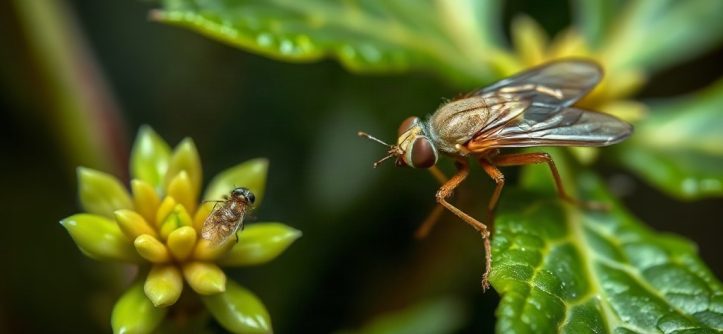
The adults measure about 1 to 2 millimeters and look like tiny white moths. They rest on leaf undersides during the day and scatter in a flurry when the plant is disturbed. That flight response is often the first clue a grower notices. Several species turn up indoors, including greenhouse whitefly and the smaller, more heat-tolerant sweetpotato whitefly.
A hand lens makes identification much easier. At ten times magnification, the waxy oval eggs and flat, scale-like nymphs become obvious against the leaf surface, while adults show their characteristic white, powdery wings. Keep a lens near your plant shelf so you can confirm a suspect leaf in seconds rather than guessing.
The life cycle that makes them hard to kill
A single female can lay hundreds of eggs, and she hides them on the newest foliage. The cycle moves through four stages:
- Eggs, laid in clusters and often coated in white wax.
- Crawlers, the mobile first nymph stage that settles within a day.
- Nymphs, flat, translucent oval scales that barely move and feed for weeks.
- Adults, which emerge, mate, and start the cycle again.
Warm indoor air speeds everything up. At typical room temperatures, a generation can complete in roughly three to four weeks, and generations overlap. That overlap explains why one spray rarely works: products aimed at adults miss the eggs and settled nymphs hiding beneath them.
Signs that confirm the diagnosis
Look for honeydew, a shiny sticky film on upper leaf surfaces, and sooty mold, a black crust that grows on it. Check for pale stippling on leaves, yellowing, and distorted new growth. Tap the pot gently and watch for a brief white cloud before you commit to a treatment plan.
Fungus gnats fly weakly around soil and stay low. Whiteflies rise from foliage and settle back on leaves. Where the insects appear tells you which pest you have.
Why whiteflies on houseplants matters
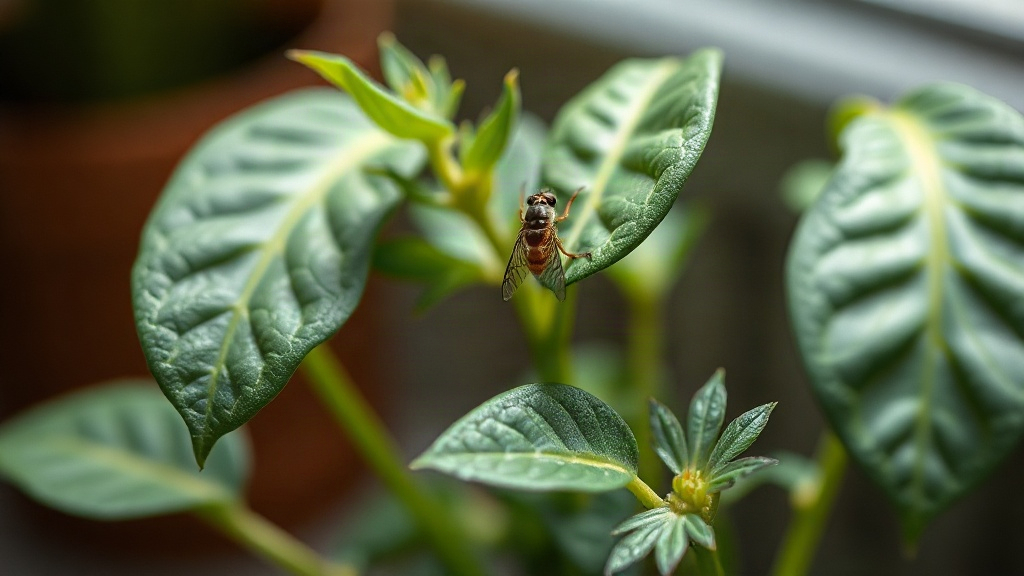
Ignoring a small population rarely works indoors. Whiteflies on houseplants matter because the indoor environment gives them three advantages: no rain, no predators, and a steady temperature. Outdoors, wind, rain, and parasitic wasps keep numbers in check. On a windowsill, none of that happens.
Feeding damage accumulates. Nymphs drain sap continuously, so leaves lose vigor, drop early, and grow pale. The honeydew they excrete coats leaves and furniture below, and the resulting sooty mold blocks light from reaching the leaf surface. A heavy infestation can kill a young or weakened plant outright, especially one already stressed by low light or irregular watering.
An infestation rarely stays contained to one room. Adults follow air currents through doorways and hallways, so a single shelf can become a building-wide problem within a season. Early action also protects the money and time invested in slow-growing specimens that take years to reach their current size.
Why the problem spreads so easily
Indoor collections crowd plants together. A single infested new purchase can seed an entire shelf within weeks. Whiteflies also hitchhike on cut flowers, herbs, and outdoor plants brought inside for winter. Because adults fly short distances but readily follow air currents, a fan or an open window can move them across a room.
The wider cost of chemical shortcuts
Broad-spectrum insecticide sprays kill whiteflies, but they also kill any beneficial insects nearby and can lead to resistance in fast-breeding populations. Repeated spraying indoors also raises questions about air quality and residue on edible herbs. Slower, targeted methods protect the plant and the household. Getting the diagnosis right early matters most, so isolate first and treat second.
If you grow mint, basil, or other culinary herbs indoors, choose controls labeled for edible crops and wash leaves before use.
Best practices
The most reliable natural control combines physical removal, trapping, and repeated gentle sprays. Success depends less on the product than on persistence and coverage.
Wipe broad, smooth leaves such as ficus or citrus with a damp cloth every few days to remove eggs and nymphs before they settle. Keep a small notebook or phone log of card counts and spray dates so you can see progress objectively. When you buy new plants, inspect them in the parking lot or before bringing them inside, and set them apart from your collection for the full quarantine period.
Isolate and inspect first
Move the affected plant at least a few feet from others, and check every neighboring plant the same day. Pay attention to leaf undersides on the lower and middle canopy, where nymphs gather. Quarantine new plants for two weeks before they join the collection.
Trap the adults
Yellow sticky cards catch flying adults and give you a running count of the population. Place them just above the canopy, where whiteflies tend to gather. These homemade whitefly traps work best as a monitoring tool rather than a cure: a falling catch rate tells you the treatment is working.
Wash and spray the undersides
A strong jet of water knocks off adults, eggs, and nymphs, which is useful on sturdy plants such as ficus or hibiscus. Follow with insecticidal soap or horticultural oil, applied until the undersides are fully wet. Repeat every five to seven days for at least three rounds, because each pass catches a different life stage.
Support the plant while it recovers
Reduce fertilizing during treatment; soft new growth invites more feeding. Trim heavily infested leaves and discard them in a sealed bag. Keep humidity moderate and light steady, so the plant can outgrow the damage once the insects are gone.
Common mistakes to avoid
Most failed treatments trace back to the same handful of errors. Catching them early saves weeks of repeat work.
- Spraying only the upper leaf surface. Eggs and nymphs live underneath. An incomplete spray leaves the next generation untouched.
- Treating once and stopping. One application kills adults, not the eggs that hatch a week later. Plan for repeat rounds.
- Skipping the neighbors. Whiteflies move fast. If you treat one plant and leave the rest, the population returns.
- Reaching for harsh sprays first. Broad-spectrum products disrupt natural enemies and breed resistance. Start with soap, oil, and traps.
- Overwatering in panic. Stressed, waterlogged roots slow recovery. Stick to your normal watering rhythm.
Do not spray in direct sun or in the heat of the afternoon; soap and oil can scorch leaves, so apply in the evening when the plant has time to dry before light hits it. Another frequent slip is reusing the same spray bottle for different products without rinsing it, which can leave residue that damages foliage. Finally, resist the urge to drench the soil. These products work on contact with insects and their eggs, not through the roots, and saturated potting mix invites fungus gnats and root rot that will weaken the plant further.
A realistic expectation
Expect visible improvement in two to three weeks and full clearance in four to six. If sticky cards still catch adults after six weeks of consistent effort, the infestation may be coming from an outdoor source or an untreated plant nearby. Track the cards weekly, and celebrate the downward trend rather than waiting for a single decisive moment.
FAQ
How long does it take to get rid of whiteflies on houseplants?
Plan on four to six weeks with consistent weekly treatment. Each round targets a different life stage, so stopping early lets newly hatched adults restart the cycle.
Do yellow sticky cards alone control an infestation?
No. Traps monitor the population and catch many adults, but they cannot reach eggs and nymphs on leaves. Use them alongside soap or oil sprays for the best results.
Are insecticidal soap and neem oil safe for all houseplants?
Most plants tolerate both, but sensitive species with waxy or fuzzy leaves can burn. Test a small area first, apply in the evening, and never spray in direct sun.
Can I use these treatments on herbs I plan to eat?
Check the product label for edible crops, and wash harvested leaves. For culinary herbs, physical removal and traps are the safest first steps.
Will whiteflies come back after treatment?
They can, especially if a new plant brings them in or an infested plant was missed. Quarantine new arrivals and inspect leaf undersides monthly to catch the first few insects.
Conclusion
Whiteflies on houseplants fade fastest when you isolate early, inspect leaf undersides, and combine traps with repeated soap or oil sprays. Consistency beats harsh chemicals every time, and it keeps your indoor garden aligned with the principles of sustainable care. Start today: move the affected plant, check the plants beside it, and set out a sticky card. With steady weekly rounds, you will watch the catch rate drop and the foliage green up again over the next few weeks.