
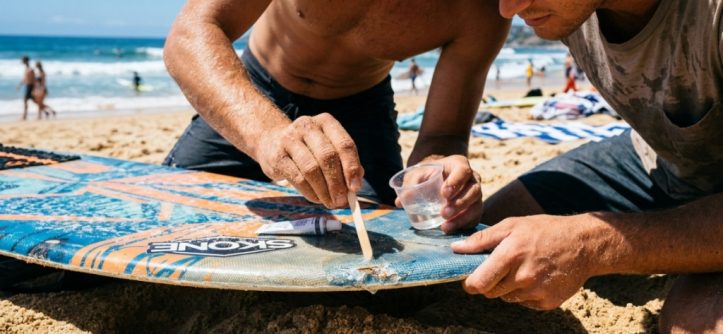
You’ve just landed that perfect slide, only to look down and see a fresh pressure ding or a spider-web crack on your board’s rail. For any skimboarder, that sinking feeling is all too familiar. Skimboards are built to take a beating from the sand and shore pound, but dings aren’t just cosmetic issues—they can soak up water, weaken the core, and eventually ruin the board’s flex and pop. The good news is that with a few practical habits and the right gear, you can drastically reduce the risk of damage. In this guide, we’ll break down exactly how to protect skimboard from dings, covering everything from handling techniques and storage solutions to DIY armor and quick repair strategies that keep your board riding crisp for years.
Key Takeaways
- The most common cause of dings is poor handling off the water, not actual wave impact, so focusing on transport and storage habits is crucial.
- Using a padded skimboard bag is the single most effective investment for protecting your board from transit damage and UV exposure.
- Applying a rail guard or tail guard provides a physical barrier against the sand and concrete, which are the primary culprits behind friction dings.
- Proper storage away from extreme heat and direct sunlight prevents delamination, which creates the foundation for larger structural dings.
- Learning to perform a basic ding repair immediately after damage occurs prevents water intrusion and stops minor chips from becoming major structural failures.
Why Do Skimboards Ding So Easily?
Skimboards are constructed with lightweight materials like foam cores, fiberglass, and sometimes carbon fiber. While these materials are essential for performance, they are inherently vulnerable to blunt force and sharp impacts. When you drop the board on a concrete parking lot, kick it across the sand, or bump it against a wooden piling, the resin shell can crack or compress. Unlike surfboards, skimboards spend most of their life being tossed onto hard, abrasive surfaces. The combination of high speed, low altitude, and gritty terrain means dings are almost inevitable unless you take proactive measures.
The Difference Between Dings, Cracks, and Pressure Dents
Not all damage looks the same, and knowing the difference helps you prioritize your protection strategy. A ding is typically a puncture or a scrape that breaks the outer fiberglass layer, exposing the foam core. A crack often surfaces as a thin line in the resin, usually from flexing or impact, but may not immediately expose the core. A pressure dent is a small indentation where the foam has compressed but the outer shell remains intact. While pressure dents can affect performance and hydrodynamics, they are less urgent to repair than a full ding, which requires immediate attention to keep water out.
Handling Techniques to Minimize Impact
The way you carry and set down your skimboard has everything to do with how long it lasts. Many riders habitually toss their boards onto the sand before running after a wave. While this is a natural part of the sport, you can minimize the impact by choosing softer sand over hard-packed areas or shell beds. Similarly, when walking to the water, carry the board under your arm rather than dragging it by the leash. The rail is the most vulnerable part of the skimboard, specifically the section where your feet grip during a slide. Dragging it on concrete or gravel will quickly grind away the resin and expose the core.
Setting Up a Safe “Drop Zone”
When you are on the beach, identify a spot away from rocks, sea walls, and sharp debris to place your board while you wax up or wait for the tide. If you are using a breakaway leash, ensure the cord isn’t wrapped around your fingers when you throw the board; a misplaced throw can send the nose directly into the sand at a high velocity. Developing the habit of placing the board down deck-up (top side facing up) reduces the chance of the bottom flexing against an uneven surface.
Investing in a High-Quality Padded Bag
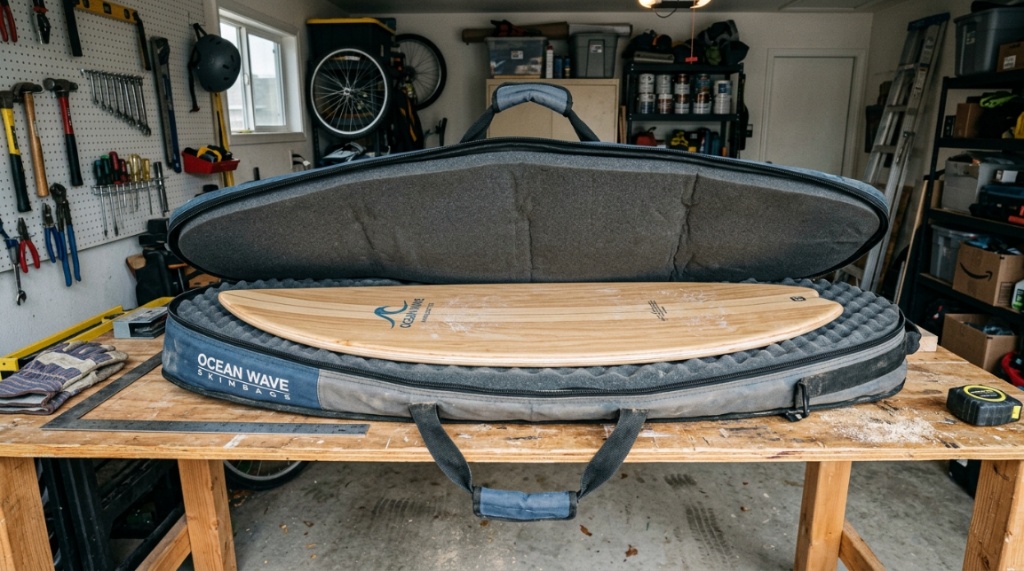
If you are serious about extending the lifespan of your board, you need a padded bag. While a bare board may offer convenience, it offers zero protection during transport. Whether you are throwing it in the trunk, strapping it to a roof rack, or carrying it across a parking lot, a bag acts as a buffer between the board and the environment. You can effectively protect skimboard from dings by using a purpose-built bag that features high-density foam padding. These bags are designed to absorb shocks from accidental drops and protect against scuffs from seatbelts or other gear. Look for a bag with a heat-resistant lining as well, especially if you live in a hot climate, as the soft foam in bags can trap heat and warp the board if left in the sun for too long.
Hard Cases vs. Soft Padded Bags
For local beach trips, a soft padded bag is usually sufficient. It’s lightweight, easy to handle, and offers ample protection against the minor bumps of daily commuting. However, if you plan to check your skimboard as airline luggage or travel on long road trips, a hard shell case (often marketed as a coffin case) provides rigid structural support. Hard cases are built to handle significant pressure and are essential for preventing compression dings that occur when heavy luggage is stacked on top of your gear. Consider your travel frequency; the extra weight and cost of a hard case are worth it for the superior protection they offer during rough handling, To upgrade your gear setup before hitting the waves, check out our guide to Find the Perfect Skimboard in Oregon for 2026.
Applying Rail Guards and Tail Guards
Even with careful handling and a good bag, the rail of your skimboard will inevitably contact the sand. This is where rail guards come in. These are typically made of high-grade polyurethane or thermoplastic and are applied directly over the rails, extending from the nose to the tail. They are primarily designed to protect the rails from the constant abrasion of the sand used for traction turns. Sand acts like sandpaper on your board’s fiberglass edge, and once the guard is applied, it takes the brunt of the wear.
Choosing Between Temporary and Permanent Guards
There are temporary rail guards that are pre-formed and basically just snap or stick on with adhesive, and there are permanent ones that require a UV cure and are molded to your specific board shape. Permanent guards are the better choice for serious skimmers who ride frequently in shallow, gritty sand. They are nearly invisible and weigh very little, despite their toughness.
Storage: The Overlooked Protection Factor
Dings are not always caused by a single impact. Sometimes, they are the result of structural weakening over time. The biggest culprit here is improper storage. Leaving your skimboard in a hot car on a summer afternoon can cause the foam core to expand and the resin to soften. This creates tiny micro-fractures, or delamination, which makes the board significantly more vulnerable to dings later on. You should always store your board in a cool, dry area, protected from direct sunlight.
Vertical vs. Horizontal Storage
If you are storing your board at home, avoid leaning it against a wall on its tail with the nose against the wall. This puts all the weight on the tail and can cause the rail to warp or the tail to compress. Instead, store the board flat, or hang it vertically by the nose from a padded strap specifically designed for that purpose.
Essential DIY Ding Prevention and Repair
Despite your best efforts, you will likely get a ding eventually. The key to prevention at this stage is speed. If you notice a crack or a chip, repair it immediately before water seeps into the foam. A wet core will rot and delaminate rapidly, turning a dime-sized ding into a repair that costs more than the board is worth. You don’t need professional lamination skills to fix a basic ding; you just need to act fast. A standard home repair kit includes epoxy resin, a small fiberglass patch, sandpaper, and masking tape.
The “Hot Coat” Method for Quick Fixes
For professional-level protection, you can use the hot coat method. After filling the ding with resin, you let it sit for about 30 minutes until it is almost hard, then you apply a second thicker coat. This creates a hard outer shell that prevents sharp dents from re-creating the same ding area. While this is a more advanced technique, it is the difference between a patch that lasts one season and a repair that looks and performs like new. Remember, a well-repaired board is often stronger at the repair site than the original glass, so don’t skimp on the resin quality.
Is a Leash a Threat or a Protector?
This is a common debate in the skimboarding community. While a leash can prevent you from chasing your board across the beach—which can cause your board to slam into rocks, pilings, and sharp trash—it can also cause “leash dings.” These occur when the leash wraps around a pole or rock, and the board whips back into it with force, creating a puncture on the nose or tail. If you are riding in open, empty beaches, a leash may be unnecessary. However, on crowded breaks or near structures, the leash is a protector. It prevents the uncontrolled slide that usually results in severe damage. Ensure your leash’s anchor point is not pulling at a sharp angle, which can cause stress fractures around the leash plug.
When Should You Retire a Heavily Dented Board?
There is a point where prevention becomes futile. If your board has taken on water and feels heavy, or if the core is crushed to the point where the board has lost its flex, you might be looking at a retirement situation. These boards are beyond protecting; they become a liability.
Frequently Asked Questions
Do skimboards need rail guards?
While not strictly mandatory, rail guards are highly recommended for a good skimboard. They provide durable traction and prevent the rails from grinding down during slides, directly preventing dings and extending the lifespan of your board. Most serious skimboarders consider them essential for riding in abrasive sand.
What is the most common cause of a skimboard ding?
The most common cause is impact with the sand or concrete rails during a slide or a fall, specifically edge impacts. Hard, compacted sand acts like fine grit sandpaper, grinding through the resin and creating dings, often during high-speed turns.
Can a dinged skimboard be ridden?
You can ride a dinged skimboard temporarily, but it is not recommended if the foam core is exposed. Riding it forces water into the core, which compromises the structural integrity. If there’s a pressure dent with no exposed foam, you can ride it with caution, but you should repair it soon to maintain performance.
Is it better to store a skimboard nose up or down?
It is better to store a skimboard flat, or hang it nose up. Storing it on its tail (nose up) is fine, but storing it leaning on its tail on a hard floor can compress the tail. Hanging it by the nose from a padded strap is safe, but never lean the rail against a sharp edge as this can warp the shape.
What is a pressure dent?
A pressure dent is a small indentation in the foam of the skimboard caused by a blunt force impact, like a knee poking into the deck. It differs from a ding because the fiberglass shell remains intact, preventing water intrusion. They may not need immediate repair but can affect hydrodynamics.
Conclusion
Protecting your skimboard from dings requires a combination of smart handling, proactive protection, and rapid recovery. The physical nature of the sport means that some wear is inevitable, but the bulk of damaging dings can be avoided by limiting hard impacts on concrete and storing the board properly.