Grip Strength for Bouldering
When bouldering, the fingers are primarily responsible for the movements and therefore it is especially important to train them specifically for bouldering. Even small amounts of specific finger training can be of great benefit for bouldering and improve your performance in the long run.
Why Grip Demands Differ
Bouldering is very different from longer routes of sport climbing in that the holds are generally much smaller and are of a very awkward nature. These holds are then completed in very powerful moves within short routes, hence your fingers are subjected to sudden very heavy loads of effort rather than long periods of low grade effort. Therefore people who regularly climb longer routes of sport climbing and then turn to bouldering will very quickly find that their fingers tire very quickly. The style of grip used for bouldering holds is also very important when trying to build grip strength for bouldering.
A Simple Dead-Hang Protocol
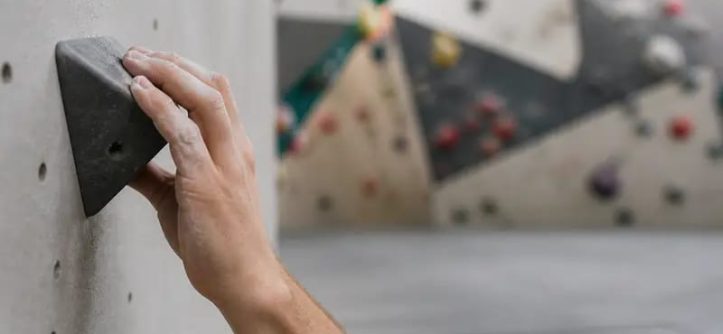
This type of training is best done with low intensity in the beginning. I start off my training with half-crimp grip on a 20mm edge, holding for 7 seconds and then having a 3 minute rest in between the hangs. I do 4-6 repeats for each finger in one training session and I only train with this type of training twice a week. It is best to have a day or two in between each training session for the fingers to recover.
Train Open-Hand Grip Too
Some climbers favour the crimp grip as it seems to make the finger more powerful for climbing. However, by training to crimp all of the time, one is placing a lot of repetitive stress on the very same tendons and pulleys. Open-hand gripped hangs on the same size fingerboard or on a slightly larger one, as the BMC’s guide to fingerboarding suggests, can provide good cross training to build up fingers that can handle a variety of holds.
Build Endurance With Repeaters
Once you can manage dead-hangs, you can start to incorporate some grip endurance or ‘repeaters’ into your sessions. A simple pattern is 7 seconds on grip, 3 seconds off grip, repeat for 6-8 repeats, then take a longer rest of 2-3 minutes and come back for more. Alternatively you can ‘pyramid’ up to your hardest grip for a session and then work back down again over the course of the session. This type of training more closely mimics the on-off nature of actual climbing.
Tools for Between Sessions
Even when you’re not in the gym, you can use a variety of grip strength training tools to maintain your grip strength and improve it during your recovery days from climbing. Spring grippers are ideal for developing crush strength in the fingers. A finger roll or even a simple weighted cord wrapped around a short bar can be used to develop strength in the extensor muscles of the fingers. Finally, putty of a low weight that can be worked with in high reps can aid in improving blood flow and strength in the fingers without excessive strain to the tendons.
Don’t Neglect the Opposite Muscles
Most people find that when doing grip strength for bouldering, they naturally concentrate on the flexors of their hand (the tendons and muscles that close your hand). The extensors in the back of your forearm also need to be strong to avoid an imbalance, which can cause soreness to your elbow. These extensors can be trained with simple reverse wrist curl movements using a light weight, i.e. a dumbbell or a rubber band around your fingers. These should be done 2 – 3 times a week.
Warm Up Your Fingers Properly
So remember to always warm up your fingers before starting to train grip strength for bouldering. Start with big, easy holds and gradually work down to smaller holds such as that described above. Remember to also follow the British Mountaineering Council’s advice on warming up before climbing. This is especially relevant when training grip strength for bouldering on a regular basis rather than just going for the occasional climb.
Know the Early Warning Signs
Early signs of damage to pulley tendons and fingers include dull aching in the finger’s base, swelling around a finger joint and discomfort whilst gripping in a crimped position. These types of injury can easily keep you off the wall for months, and so it is very important to recognise the early warning signs of damage. Allow at least a day to recover between grip-specific sessions, and don’t be afraid to take off additional days if you feel that your fingers are feeling any discomfort what so ever. Bouldering has experienced an explosion in participation in recent years and has become a common activity to practice between longer climbing sessions on indoor climbing walls. However intense grip-specific training is known to cause injury to fingers and hands of many climbers in recent years, and therefore it is very important to be aware of the problems that can occur.
Keep Facilities and Equipment in Mind
Climbing centres and wall fingerboards need to be maintained and used in line with the BMC’s climbing wall safety resources and the wall’s own rules. They can cause serious physical injury if used improperly.
Building grip strength for bouldering takes time and patience. Work on the basics and with proper recovery, your fingers will thank you after a long bouldering session.