Yes, the Tagliapasta Demetra-Divina is a strong choice for homemade cavatelli, orecchiette, and gnocchetti. Its 1.7 kg aluminum construction and 4.2-star rating across more than 250 reviews show strong buyer confidence. However, this specialized machine suits pasta enthusiasts better than casual cooks. If you are comparing dedicated pasta tools, this best pasta maker review helps establish the broader context. This review focuses on its actual strengths, limitations, workflow, cleaning needs, and value.
Key Takeaways
- Best for: Homemade cavatelli, orecchiette, gnocchi, and Sardinian-style gnocchetti.
- Build quality: Aluminum construction provides a sturdy, durable foundation for manual operation.
- Stability: The suction-cup mounting system helps prevent movement on suitable smooth counters.
- Main advantage: The dedicated shaping system produces consistent regional pasta forms without electrical power.
- Main drawback: The machine has a narrower purpose than conventional pasta rollers and cutters.
- Cleaning concern: Its construction makes thorough cleaning more involved than some detachable pasta tools.
What Is the Tagliapasta Demetra-Divina?
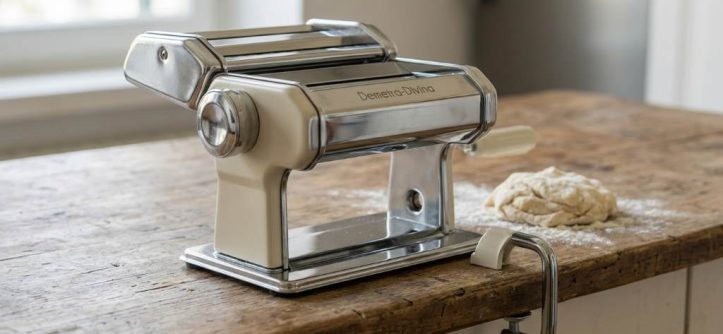
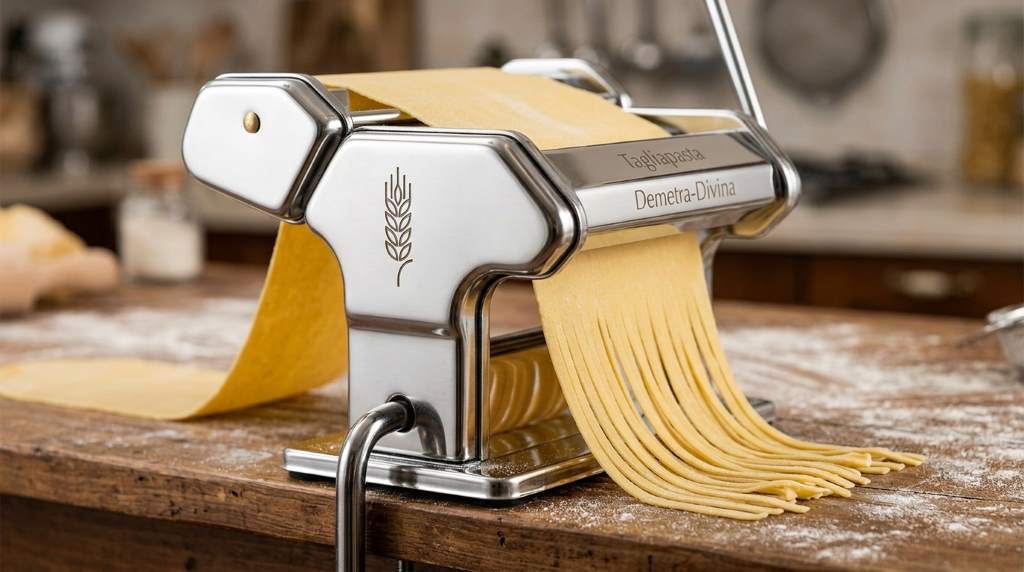
The Tagliapasta Demetra-Divina is a manual pasta machine designed around traditional Italian pasta shapes. Unlike general pasta rollers, it focuses on forming specific shapes through dedicated shaping components. Product specifications list an aluminum body, food-contact plastic components, manual operation, and three forming settings.
Its compact footprint measures roughly 24 by 14 by 19 centimeters, while the machine weighs about 1.7 kilograms. That weight matters because manual cranking creates force that can move lighter countertop appliances. The Demetra-Divina instead combines physical mass with suction mounting for greater working stability.
The machine targets cooks who value shape consistency rather than maximum pasta variety. Therefore, it makes more sense as a specialist tool than as a replacement for every pasta-making appliance.
Design, Construction, and Countertop Stability
The aluminum construction gives the Demetra-Divina a reassuringly substantial feel during operation. Its coated exterior also creates a more polished appearance than many basic plastic pasta makers. For kitchens where durability matters, the material choice represents one of its strongest advantages.
The suction-cup base uses a lever mechanism to secure the machine against a suitable smooth surface. Consequently, granite, marble, glass, and similarly smooth counters should provide better results than textured worktops. A recent hands-on review also identified suction performance as dependent on proper surface contact.
Before cranking, press the machine firmly against the counter and engage the suction mechanism completely. If the base shifts during operation, stop and reposition it rather than forcing the handle.
This design also makes the machine more flexible than clamp-mounted alternatives. However, you should check your countertop surface before purchasing if you rely heavily on suction mounting.
For kitchens with awkward storage areas, its compact dimensions remain useful. You can also consider Dallas corner cabinet storage solutions when organizing bulky specialty cookware. Good storage matters because dedicated appliances often become frustrating when accessing them takes too much effort.
How the Demetra-Divina Makes Pasta
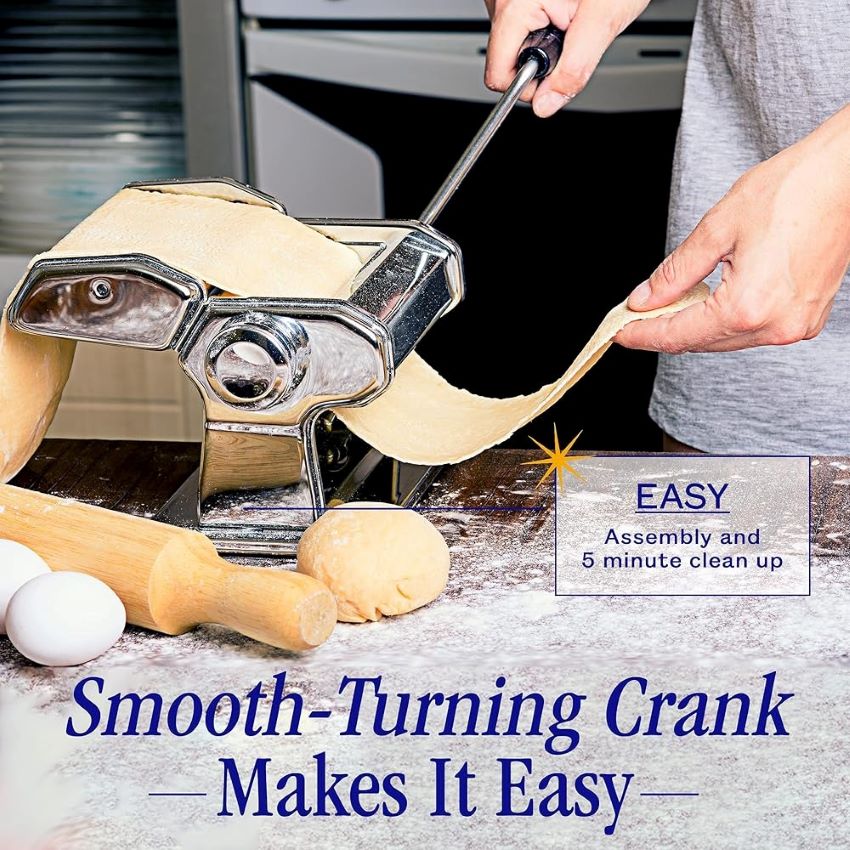
The Demetra-Divina uses a straightforward manual workflow that requires no motor or electrical connection. You prepare firm dough, shape it into manageable portions, feed the dough through the forming mechanism, and turn the crank.
The internal shaping components compress and form the dough as you operate the handle. A guide system then directs the finished pieces toward a container positioned below the outlet. This arrangement keeps the process relatively controlled and reduces unnecessary handling after shaping.
The machine supports several traditional formats, although listings differ slightly when describing the exact combinations. Commonly reported options include cavatelli, orecchiette, gnocchi, and Sardinian gnocchetti.
That distinction matters because this machine does not function like a conventional sheet-style pasta roller. You cannot expect it to replace equipment designed for spaghetti, fettuccine, lasagna sheets, or ravioli preparation.
Dough Consistency Matters More Than Most Beginners Expect
The machine performs best when you treat dough preparation as part of the equipment setup. A soft or overly hydrated dough can stick to forming components and produce poorly defined shapes.
Experienced users commonly recommend a firm semolina-based dough and adequate kneading before shaping. One detailed customer review recommends roughly equal weights of semolina and half that amount of water.
After kneading, allow the dough to rest while covered before feeding it through the machine. Then divide it into narrow cylinders and keep the working surface lightly dusted with flour or semolina.
Do not compensate for sticky dough by adding excessive flour during every pass. Instead, adjust the dough itself until it feels firm, smooth, and workable without becoming brittle.
Features That Matter in Everyday Use
The most valuable feature remains the machine’s specialization. It eliminates several repetitive hand-shaping steps while preserving the appearance associated with regional Italian pasta.
The manual crank also gives you direct control over the production speed. That makes the machine quiet, predictable, and independent of electrical outlets. For cooks who enjoy traditional preparation, this hands-on control can feel more satisfying than using an electric appliance.
The suction mounting system provides another practical advantage. When properly engaged, it reduces unwanted movement and lets you maintain a steady rhythm while turning the handle.
The food-contact components also receive attention in the product specifications. Listings identify food-grade plastic components and aluminum construction, while the machine remains compact enough for normal home kitchens.
Another advantage involves batch consistency. Once you learn the correct dough texture and feeding speed, repeated pieces can look remarkably similar.
If you are improving the surrounding kitchen workspace, modernise your kitchen planning can also improve how frequently you use specialty cooking equipment. Better organization reduces the friction between deciding to make pasta and actually starting.
Pros of the Tagliapasta Demetra-Divina
The Demetra-Divina has a clear purpose, and that focus creates several meaningful advantages. It does not attempt to perform every pasta-making task, but it performs its intended jobs efficiently.
- Sturdy construction: The aluminum body provides substantial weight and a durable foundation.
- Stable operation: The suction-cup base helps keep the machine secure on compatible smooth surfaces.
- Traditional shapes: The forming system targets regional pasta styles that can require significant manual effort.
- No electricity: Manual operation eliminates motors, power cords, and electrical maintenance.
- Consistent output: Correct dough preparation can produce uniform pieces with repeated practice.
- Compact footprint: Its dimensions remain manageable for most home cooking spaces.
- Long-term appeal: Customer reports include examples of repeated use over several years.
These advantages make the machine particularly attractive to serious home cooks who frequently prepare regional pasta. For occasional users, however, the specialized design may not justify the purchase price.
Cons and Limitations You Should Know
The biggest limitation involves versatility. The Demetra-Divina cannot replace a conventional roller when you want long noodles, thin sheets, or filled pasta.
Cleaning also deserves attention before purchase. One hands-on review specifically criticized the machine because it does not completely disassemble for deep cleaning.
That limitation becomes more important when dough enters small crevices or shaping areas. Therefore, clean the machine promptly instead of allowing dough residue to harden.
The suction system also depends heavily on the countertop. Textured, porous, uneven, or contaminated surfaces can reduce adhesion and create movement during operation.
Another drawback involves the learning curve. Even though the crank mechanism looks simple, excellent pasta depends on dough consistency, portion size, flour control, and feeding technique.
Orecchiette can require particular practice because their characteristic shape depends partly on handling technique. Consequently, beginners should expect a short learning period rather than perfect results immediately.
Finally, price can become a concern for cooks who make pasta only a few times each year. A specialized manual machine delivers better value when you actually use its specialized capabilities regularly.
Cleaning and Maintenance: The Right Routine
Proper maintenance can protect both performance and longevity. Start by removing visible dough particles before they dry inside the shaping mechanism.
Use a dry brush or appropriate cleaning tool to remove loose flour and dough from accessible areas. Avoid aggressive scraping that could damage food-contact surfaces or protective finishes.
Because the machine does not fully disassemble, inspect the rollers and internal areas carefully after each session. This small habit prevents old dough from becoming a recurring contamination or performance problem.
Never assume that a dishwasher-safe listing means every component deserves automatic washing. Product listings can vary by market, so follow the instructions supplied with your specific unit.
Also inspect the suction base before each use. Clean the contact area, position the machine on a suitable surface, and confirm secure adhesion before applying force.
Who Should Buy the Demetra-Divina?
The Demetra-Divina makes the most sense for enthusiastic home cooks who regularly prepare cavatelli, orecchiette, or Sardinian pasta. It also suits people who prefer manual tools over powered kitchen appliances.
It becomes particularly attractive when consistent shapes matter more than maximum versatility. A dedicated machine can remove repetitive handwork without turning the process into an entirely automated experience.
However, casual cooks should consider their actual habits before buying. If you mainly prepare spaghetti, fettuccine, or lasagna sheets, another pasta maker will provide broader utility.
Small food businesses may also appreciate its manual simplicity for limited specialty batches. Yet high-volume production demands faster equipment and usually justifies an electric commercial solution.
Who Should Skip This Pasta Maker?
Skip the Demetra-Divina if you want one machine for every pasta format. Its specialized forming mechanism naturally limits its usefulness outside its intended shapes.
You should also reconsider it if your countertop cannot support reliable suction mounting. A machine that moves during cranking will quickly become frustrating, regardless of its construction quality.
Likewise, avoid purchasing it solely because you enjoy occasional homemade pasta. The investment makes stronger financial sense when specialty pasta appears regularly on your menu.
If storage space remains extremely limited, measure your available cabinet or counter area first. A compact appliance still needs an accessible home to encourage frequent use.
How Does It Compare With Conventional Pasta Makers?
Conventional pasta makers usually prioritize sheets and long noodles, while the Demetra-Divina prioritizes shaped regional pasta. Therefore, the better machine depends entirely on the pasta you actually cook.
A traditional roller offers greater format flexibility through adjustable thickness and cutting attachments. The Demetra-Divina instead reduces the specialized labor required for certain shapes.
Electric machines provide another contrast because they automate more of the physical work. However, they introduce motors, power requirements, additional noise, and potentially more complex maintenance.
The Demetra-Divina occupies a useful middle ground. It automates the repetitive shaping action while keeping the cook responsible for dough preparation and manual control.
For cooks designing a larger entertaining area, outdoor kitchen features can also influence where specialty pasta equipment fits into meal preparation. A dedicated prep zone can make manual pasta sessions much easier.
Is the Tagliapasta Demetra-Divina Worth It?
Yes, the Demetra-Divina is worth considering if you regularly make the pasta shapes it specializes in. Its sturdy construction, stable mounting, manual simplicity, and consistent shaping create a compelling combination.
However, value depends more on usage frequency than on the machine’s feature count. A specialized tool becomes expensive clutter when you rarely prepare its intended pasta formats.
Its strongest selling point is therefore not raw versatility. Instead, it offers a focused way to make traditional shapes with less repetitive handwork and more consistent results.
Current marketplace feedback remains generally favorable, with listings showing around 4.2 stars from more than 250 customer ratings. That evidence supports its reputation, although individual experiences still depend heavily on dough technique and countertop compatibility.
For serious pasta enthusiasts, that combination makes the Demetra-Divina a practical long-term kitchen investment. For occasional cooks, a more versatile pasta maker may deliver better overall value.
Final Verdict
The Tagliapasta Demetra-Divina earns its reputation through focused performance rather than excessive features. Its robust aluminum construction, manual mechanism, suction mounting, and specialized shaping system work together effectively.
Nevertheless, buyers should understand its limitations before spending money. Cleaning requires care, suction needs a compatible surface, and the machine cannot replace a universal pasta roller.
If authentic shaped pasta forms appear regularly in your cooking routine, this machine deserves serious consideration. Check the current configuration, included forming components, cleaning instructions, and seller support before purchasing.
Frequently Asked Questions
Can the Tagliapasta Demetra-Divina make orecchiette?
Yes, the Demetra-Divina can produce orecchiette, although achieving ideal shapes requires some practice.
Is the Demetra-Divina electric?
No, it uses a manual crank, so you do not need electricity during operation.
Does the machine stay stable while cranking?
Yes, its suction-cup base can provide strong stability when attached correctly to a smooth surface.
Is the Demetra-Divina suitable for beginners?
Yes, beginners can use it, but consistent dough preparation significantly improves the learning experience.
Can it replace a standard pasta roller?
No, it specializes in shaped pasta and does not provide the broad sheet and noodle functionality of standard rollers.