
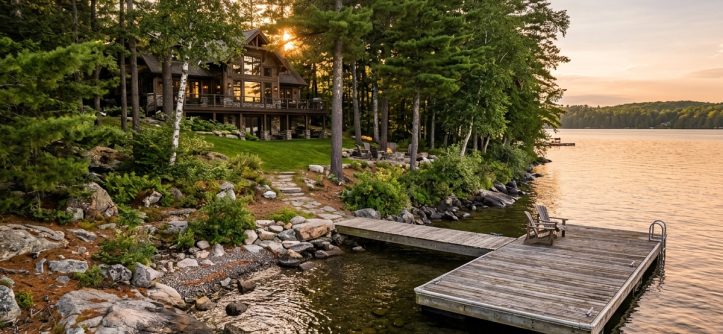
Docks that look identical in a brochure behave very differently once they hit real water. Between a calm pond, a tidal creek, and a wind-whipped reservoir, the forces on a structure change completely. Reading those conditions before buying keeps a good-looking dock from turning into a yearly repair bill.
Fetch, Wakes, and Wind Set the Strength Requirement
Open water decides how heavy a frame needs to be. Fetch, the distance wind travels across water with nothing in the way, builds wave height, so a property facing two miles of open lake sees far more motion than a cove ringed by trees. Wakes add another layer, since boats passing close to shore throw sharp, repeating waves that strike at odd angles and work hinges loose over time.
Frames for exposed sites use thicker tubing, tighter float spacing, and extra anchor points. Calm sites can run lighter and cost less, which is a fair trade when the water cooperates. Buyers who skip this step often pay twice, once for a dock that flexes and again for its replacement. Boat size matters here as well, because a thirty-foot cruiser moored alongside catches far more wind than a fishing skiff.
Saltwater, Brackish Water, and Fresh Water Treat Metal Differently
Water chemistry changes what a dock needs to survive. Salt speeds up corrosion on anything metal, so coastal projects call for marine-grade alloys, stainless fasteners, and plastic isolators between mismatched metals. Fresh water is gentler, though brackish estuaries sit in the middle and catch people who assumed lake-grade parts would do. Aluminum docks handle all three settings well when the alloy and hardware match the water, since the metal builds a thin oxide skin instead of rusting.
Marine growth deserves a mention too. Algae, barnacles, and zebra mussels cling to floats and hulls in different waters, and each one changes the cleaning routine. Smooth, sealed float shells shed growth faster than rough ones, and they cost less to scrub each spring. Sun matters as well, since intense UV and heat in southern climates break down cheap plastic faster than northern conditions do.
Depth, Tides, and Boat Draft Shape the Layout
Shallow water limits where a boat can tie up. Any boat with a three-foot draft needs more than three feet under it at the lowest water of the year, not the average, so the dock has to reach deep enough to meet that number. Long walkways solve the problem but add wind load and cost, which is why designers check depth at several points along the planned route.
Tidal and reservoir sites complicate the picture, since depth can shift by many feet. Because it rides the surface, an aluminum floating dock follows the water up and down, so the deck stays at a steady height for boarding and loading. Experienced floating dock builders use hinged ramps and pile guides to handle the shore connection. Fixed piers still work in deep, steady water, though they lose appeal anywhere levels move.
Do Soil, Slope, and Local Rules Narrow the Field?
Bottom material affects anchoring more than most buyers expect. Soft mud holds posts poorly, sand shifts under current, and rock blocks driven piles altogether, so each one points toward a different method. Steep banks need adjustable ramps, while flat, shallow shores may need a longer approach walkway before the water gets deep enough.
Regulations follow the water too. Many lakes cap dock length, limit surface area, or require open decking so light reaches plants below. Permit offices in some regions treat floating systems more gently than fixed piers because they disturb less of the bottom. Checking with the local authority before ordering prevents costly redesigns, and builders familiar with the area usually know the rules already.
Bringing Site Data Into the Shopping Process
Numbers beat guesses when comparing options. Gather water depth at the lowest and highest levels, the longest stretch of open water facing the property, the bottom type, and the months the dock will be in use. Photos of the shoreline help too. With those details in hand, shoppers browsing aluminum boat docks for sale can compare ratings for wind, wave, and load instead of judging by looks.
Listings for aluminum docks for sale often cover dimensions and finishes but skip site suitability, so questions fill the gap. Ask what wave height the frame is rated for, how anchoring is handled for the bottom type, and whether sections come apart for winter. Businesses benefit most from this homework, since a marina or rental operation loses income whenever a slip sits out of service.
Anyone weighing these conditions can bring them to Flotation Systems, which designs and builds custom aluminum boat docks for homes, marinas, and resorts. The team reviews depth, exposure, bottom type, and local rules, then matches frame strength, floats, and anchoring to the site.