
A bedroom can look perfectly styled and still feel cold. The fix usually isn’t a bigger budget or a full redesign — it’s texture and layering. Soft surfaces absorb light and sound, while layered bedding traps warmth and creates the visual depth that makes a room feel inviting rather than staged. Getting this right starts with the pillow, since it’s the element you touch first and see most often. A faux fur accent like the PeakPillows grey pillow cover shows how a single high-texture piece can shift the mood of an entire bed. Below, you’ll find a practical system for building that coziness deliberately.
Quick Answer
Build coziness from the mattress up: a soft base layer (fitted sheet), a temperature-regulating middle layer (duvet or quilt), and a textured top layer (throw blanket or coverlet). Then add pillows in three sizes — two sleeping pillows, two mid-size, one accent. Mix at least three textures (smooth cotton, nubby knit, plush faux fur) and keep colors within two to three related tones so the layering reads as calm rather than cluttered.
Key Takeaways
- Cozy bedrooms rely on three texture families: smooth, nubby, and plush. Using only one makes a bed feel flat no matter how expensive the linens are.
- Layering serves a function, not just a look — each layer manages warmth, so you can adjust the bed to your body temperature instead of the room’s.
- Pillow arrangement matters more than pillow count. Three sizes in a front-to-back scale create depth; six identical pillows create a wall.
- Warm, low-contrast lighting and soft floor coverings do as much for coziness as the bedding itself.
- Faux fur and other high-pile textures should be used as accents, not the whole bed, or the result feels heavy and hard to maintain.
Start With Texture, Not Color
Most people decorate a bedroom by choosing a color palette first. That’s backwards for coziness. Color sets the mood, but texture is what your body actually registers when you sit down on the bed. A monochrome room in five different textures feels far warmer than a colorful room in one flat fabric, To upgrade your room’s overall layout and aesthetic further, learn how wardrobe doors can transform your bedroom.
Think in three texture families and make sure all three appear somewhere on the bed:
- Smooth: sateen or percale sheets, washed linen, flat-weave cotton. These give the eye a place to rest.
- Nubby or woven: chunky knit throws, waffle-weave blankets, boucle, ribbed duvet covers. These add visual grain.
- Plush or high-pile: faux fur, fleece, velvet, chenille. These are the warmth-carriers and should be the smallest percentage of the bed.
A useful ratio is roughly 60% smooth, 30% nubby, 10% plush. If everything is plush, the bed looks like a display in a furniture showroom and becomes a magnet for dust and pet hair. If nothing is plush, it looks like a hotel — clean, but not cozy.
Why Texture Beats Pattern for Coziness
Patterns add visual interest but not physical warmth. A busy floral duvet in a crisp cotton still feels cool to the touch. Texture works on two levels at once: it changes how the fabric feels against your skin and how it catches light. High-pile surfaces scatter light softly, which is why a faux fur or velvet pillow makes a corner of the room look dimmer and calmer than a smooth pillow in the same color.
How to Layer Bedding in the Right Order
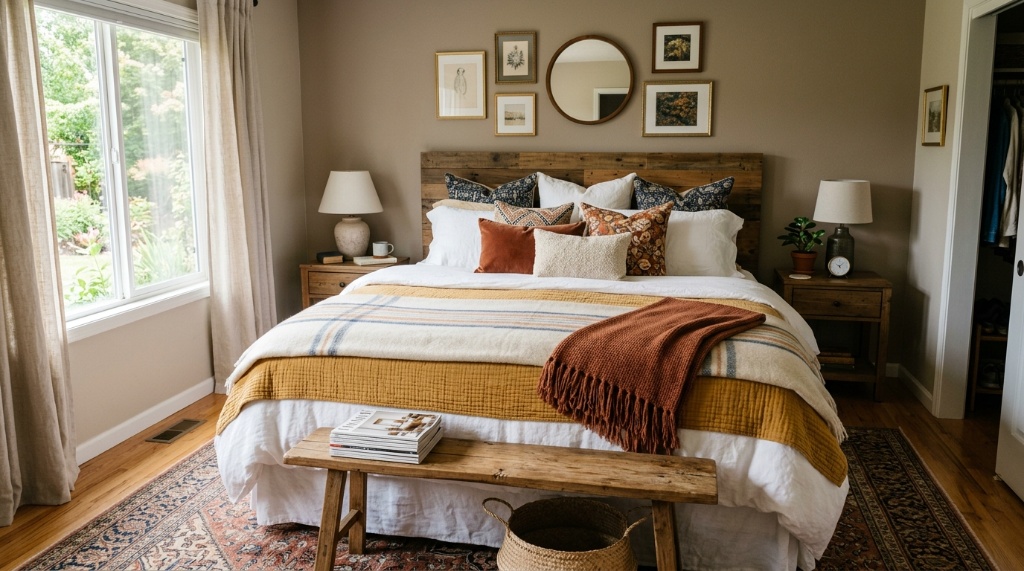
Layering isn’t about piling on more blankets. It’s about building a stack where each layer has a job and can be removed independently. Here’s the order that works for most climates and sleepers.
- Fitted sheet: Choose a breathable fabric like cotton or linen. This is the layer that touches your skin all night, so prioritize feel over looks.
- Flat sheet (optional but useful): A flat sheet between you and the duvet keeps the duvet cleaner and gives you a lighter option on warm nights.
- Duvet or quilt: This is your main warmth layer. A mid-weight duvet insert covers most of the year; add or remove a blanket rather than swapping the whole duvet seasonally.
- Coverlet or quilted blanket: A thinner layer folded across the lower two-thirds of the bed. It adds a color or texture break and protects the duvet from pets and shoes.
- Throw blanket: Folded at the foot of the bed or draped diagonally. This is where you can go bold with texture — chunky knit, faux fur, or a woven throw.
The key rule: each layer should be visible from at least one angle when the bed is made. If a layer is completely hidden, it’s adding bulk without adding coziness.
Layering for Hot Sleepers vs. Cold Sleepers
Hot sleepers should keep the base layers thin and breathable and put the warmth in the removable top layer — a duvet they can kick off without disturbing the whole bed. Cold sleepers can go heavier on the middle layer and add a plush throw that stays in place. The mistake both groups make is buying one very heavy duvet and treating it as the only option. Two medium layers always beat one heavy layer because you can adjust them separately.
Pillow Arrangement: The Part Most People Get Wrong
Pillows do more for the cozy look of a bed than any other element, and they’re also the most commonly overdone. The goal is a graduated arrangement that creates depth, not a symmetrical wall of cushions you have to remove every night.
A reliable formula uses three sizes:
- Back row: Two standard or king sleeping pillows in the same pillowcase as your sheets. These are the ones you actually sleep on.
- Middle row: Two slightly smaller decorative pillows — euro shams, linen cushions, or a textured square. These add height and a color break.
- Front: One or two accent pillows with the strongest texture. This is where faux fur, velvet, or a bold knit earns its place.
If you want a lower-maintenance bed, drop the middle row entirely. Two sleeping pillows plus one accent pillow is enough to look styled and takes ten seconds to arrange.
Choosing Accent Pillow Textures That Don’t Fight Each Other
Accent pillows are where texture mixing either works or falls apart. A simple approach: pick one plush pillow and pair it with one smooth or nubby pillow in a related tone. Two plush pillows side by side tend to look heavy, and two identical accent pillows in the same fabric add symmetry without adding interest.
A grey faux fur cover, for example, pairs naturally with washed linen, chunky cream knit, or a matte velvet in a slightly darker grey. It clashes with shiny satin and with very bright, saturated colors, because the plush texture already draws the eye.
Lighting and Floor Textures Complete the Room
Bedding alone won’t make a bedroom feel cozy if the lighting is harsh and the floor is bare. These two elements are frequently overlooked because they’re not part of the “bed” — but they change how the bed reads.
Lighting
Overhead ceiling lights flatten texture and make every fabric look the same. Instead, use two or three low, warm light sources at different heights: a bedside lamp, a floor lamp, and optionally a small light on a dresser. Warm bulbs in the 2700K range keep the room feeling soft. If you can dim them, even better — dimming lets you shift the room from functional to restful without changing anything else, To upgrade your room’s overall layout and aesthetic further, learn how wardrobe doors can transform your bedroom.
Floor and Wall Softness
A rug beside the bed does two things: it warms the floor underfoot and it absorbs sound, which makes the room feel quieter and more enclosed. A high-pile or shag rug amplifies the effect. On walls, a fabric headboard, a woven wall hanging, or even a heavy curtain panel adds the same kind of softness. Curtains matter more than people expect — bare windows make a bedroom feel exposed, and a full-length curtain in a natural fabric instantly softens the whole space.
Common Mistakes That Make a Bedroom Feel Cold
Even with good bedding, a few habits consistently undercut coziness:
- All-white everything. White is calming, but without texture variation it reads as clinical. If you want an all-white bed, make sure the textures are dramatically different.
- Too many pillows. More than five decorative pillows turns making the bed into a chore, and most people stop doing it.
- Matching everything. A bed-in-a-bag set in one fabric and one pattern looks flat. Buy pieces separately, even if the colors match.
- Ignoring the underside of the bed. A bare bed frame with visible storage or dust underneath breaks the softness. A bed skirt or a low-profile frame helps.
- Cold-touch fabrics on the top layer. Sateen and silk feel cool. If your top layer is smooth and shiny, the bed will feel cool even in a warm room.
- Overlooking maintenance. High-pile textures collect dust and pet hair. If you have pets or allergies, limit plush items to one or two removable, washable pieces.
Frequently Asked Questions
How many layers should a cozy bed have?
Three to five functional layers is the sweet spot: fitted sheet, optional flat sheet, duvet or quilt, a coverlet folded across the bed, and a throw. More than that adds bulk without adding warmth or visual interest.
What textures work best together for a cozy bedroom?
Combine smooth (cotton, linen, sateen), nubby (knit, waffle, boucle), and plush (faux fur, velvet, fleece). Aim for roughly 60% smooth, 30% nubby, and 10% plush so the bed feels soft without becoming heavy or hard to clean.
Is faux fur bedding hard to maintain?
Faux fur is manageable if you choose removable covers and wash them according to the care label, usually cold and air-dried. It does attract dust and pet hair, so it works best as an accent pillow or throw rather than a full duvet cover.
How do I make a bed look cozy without spending much?
Change the top layer first. A textured throw and one plush accent pillow can transform a plain bed for a small cost. Adding a rug beside the bed and swapping harsh bulbs for warm, dimmable lamps covers most of the remaining gap.
Should the duvet be tucked in or left loose?
Loose is generally cozier. Tucking creates crisp, hotel-style lines; leaving the duvet loose and folding a coverlet or throw across it creates the relaxed, layered look most people associate with a cozy bedroom.
What color palette makes a bedroom feel warmest?
Warm neutrals — cream, oatmeal, taupe, warm grey, muted terracotta — tend to feel cozier than cool greys and stark whites. You can keep the palette simple and let texture do the work, which is easier than coordinating multiple colors.
Conclusion
Cozy bedrooms are built, not bought in one shopping trip. Start with a breathable base layer, add a mid-weight duvet you can adjust, and finish with a textured throw and a graduated pillow arrangement. Keep your texture mix balanced — mostly smooth, some nubby, a little plush — and support the bed with warm, low lighting and a soft rug. If you change only one thing this week, change the top layer and add a single high-texture accent pillow. That one shift is usually enough to make the room feel noticeably warmer.