

Knowing when to change your Steering Pump fluid can help you avoid costly repairs.
Cars that have been left for long periods of time commonly deteriorate severely due to lack of maintenance. The steering pump fluid is another area that is often neglected as there are no immediate symptoms. It can cause severe damage to the seals and pump within a short space of time if it is left.
Check What The Fluid Looks Like
Check the colour of the fluid in your power steering. Healthy fluid is typically clear to light amber, much like fresh apple juice. Dark brown or black fluid with burnt-smelling oil in the reservoir or oily grit between your fingers when you remove the cap indicates degenerate fluid. It may be necessary to clean out the system, or you could just change the fluid.
Know Your Service Schedule
There are many cars on the road today which have sealed-for-life hydraulic systems, or have gone to full electric steering. In such cases there is no fluid to change. On older cars with high mileage it is recommended to change the fluid every two years or 40,000 to 50,000 miles, depending on the vehicle. It’s best to check the handbook or service schedule for individual vehicles to see if they fall into either of these two categories.
Watch For These Warning Signs
The lubricating properties of a power steering fluid typically break down long before any parts fail. There are many warning signs and noises that degraded fluid will produce before it all comes crashing down. A power steering pump is often blamed for a ‘worn’ steering pump type of noise and feeling of increased resistance when trying to turn a locked wheel but in many cases the culprit is tired fluid. Listen for a whine or grind, especially when turning to full lock and also feel for increased resistance especially at slow speeds.
Inspect It At Every Service
Just looking at the power steering fluid every time your car has a service is enough to prevent big costly repairs down the line. Check the level in the reservoir against the indicators on the side. Look for signs of deterioration such as foaming, cloudiness or even metal particles that have eroded from internal components and are being dissolved in the fluid and coming out of the worn parts.
Use The Right Fluid Type
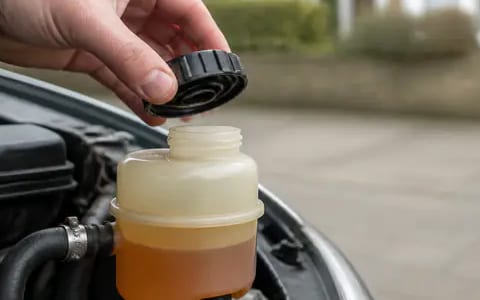
This is often a point of confusion for people as many cars use a dedicated Power Steering Fluid (PSF) whilst others use Automatic Transmission Fluid (ATF). Also, many people will simply use whatever they have in the garage for topping up, not realising that the wrong fluid can swell the internal seals and cause leaks. Always refer to your owner’s manual or the cap of the reservoir for the correct specification.
Flush After Any Repair
Even after a simple repair of your steering such as fitting a reconditioned power steering pump, it’s wise to flush the system out and change the steering pump fluid after the repair. This is because old fluid can contain a lot of grit and varnish and even worn seal material. This would travel through the new steering pump components and cause premature wear. A flush of the system and change of steering pump fluid after any repair will give new components a clean start.
Don’t Just Keep Topping Up
If you need to keep topping up the power steering fluid, then there must be a leak somewhere. Even a small amount of seal wear could cause a problem, which could deteriorate over a few months to require a complete power steering pump change. Don’t assume that a small amount of leak is of no consequence – it could cost a lot of money in the long run.
Dispose Of Old Fluid Properly
Used power steering fluid is classified as a hazardous waste and therefore must NOT be poured down the drain or on the ground. Most garages will dispose of used vehicle fluids for you as part of their normal service but if you are checking or topping up your power steering fluid at home then used fluid must be disposed of via your local household waste recycling centre as part of your normal household waste and should be stored in a sealed, clearly labelled container until you get there.
Monitoring power steering fluid colour, level, and strange noises is an inexpensive way to identify potential problems with your power steering system before they become expensive repairs.