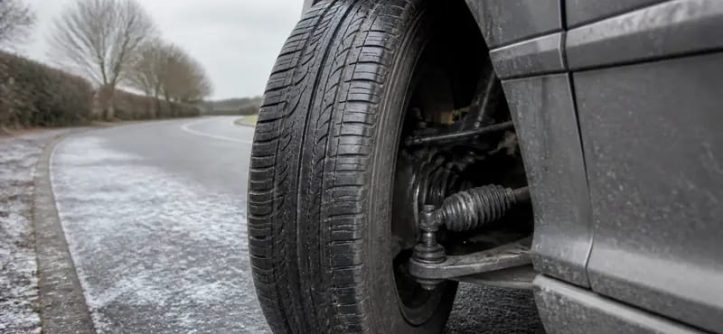
Salt can cause severe corrosion to parts of your car’s steering. Here is how salt can damage parts of your car’s steering and what to look for to catch any damage early.
Why Salt Is So Corrosive
Salt attracts moisture and this constant penetration of water into bare metal parts leads to faster oxidation than would be the case with simple water penetration. Many cars are stored in garages and sheds throughout the winter but are occasionally moved. It is likely that these cars have been exposed to salt on the roads at some time and so could develop hidden rust in areas where a dry stored car would not. The amount of salt that is spread on major roads in winter across the country is in the hundreds of thousands of tonnes and so there is plenty of it to be finding its way onto the underside of cars.
Track Rod Ends And Ball Joints
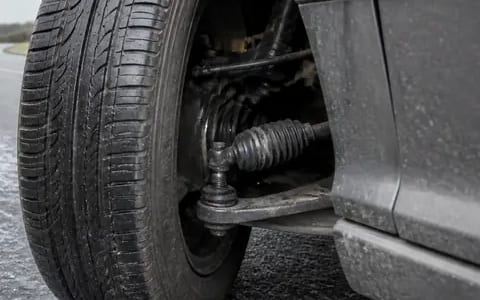
Rust on Track Rod Ends and Ball Joints typically starts to develop on the joints within the rubber boot which contains grease to protect the joint. The rubber boot hardens, cracks or splits allowing salt contaminated water to penetrate the joint. The metal surfaces within the joint then start to pit and eventually the joint can seize or wear excessively and require replacement. It is a simple matter to check the rubber boots every few months and clean out any grit etc within the joint and to check for any splits or perishing of the boot itself.
Steering Rack Gaiters
Rubber gaiters surround the inner steering rod and the steering rack. These rubber gaiters can deteriorate, often as a result of road grime, which can become muddy in wet weather. Also, as mentioned above, the rubber can be damaged by salt and once split or deteriorated further, will allow dirty water to enter. This can lead to corrosion of the rod or even the internal seals of the rack. It may be possible to clean corroded areas but a damaged rack will require a full rebuild.
Hydraulic Pipework And Unions
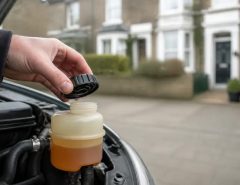
Pipework and the unions for the fluid that is pumped around by the power steering pump can rust from outside in. In particular, the metal mounting brackets for the pipework can corrode. In most cases this type of corrosion will start to leak before it fails completely. Look for signs of seepage along the lower parts of the steering rack, and in particular around any joints or locations where the pipes are secured by rubber or metal clips.
Electrical Connectors And Sensors
Corrosion to the wiring, connectors and sensors in power steering systems can cause similar problems. However, corrosion in these systems can cause intermittent faults which can be difficult to diagnose. The car’s onboard computer may trigger a warning light to appear which could be intermittent and may disappear upon next starting of the car. Assistance to steering may also be intermittent and may cease to function from time to time.
A Simple Underbody Wash Routine
Rinse under your car after every trip on roads that have been treated with salt. This can be done simply by hosing out the salt from the underside of your car after every couple of trips. Even a simple underbody wash every few weeks will rid your car of a lot of corrosion. It’s better to wash out salt more frequently rather than wait until spring.
Checks You Can Do Yourself
For the majority of corroded parts it is easy enough to inspect for signs of corrosion. Visible signs of corrosion to joints, rust streaks on components, white powdery deposits to connector insulator boots etc, cracked, torn or perished gaiters etc. Also, turn the steering lock to lock (with the engine switched off) and gently rock from side to side to check for any signs of knocking and also take note if there is any increased stiffness when trying to turn at slow speeds.
Getting It Checked After Winter
Just because you can’t see corrosion damage, doesn’t mean it’s not there. Once the weather starts to get better and the road is no longer covered in salt, it would be worth getting your steering checked by a Power Steering Specialists. They can check for hidden corrosion damage to components such as track rod ends, ball joints, gaiters and even connector and sensor corrosion that can cause problems later down the line. This could save you from a very expensive repair further down the line.
Checking for any signs of wear, and rinsing your undercarriage during the Winter months will suffice to prevent most cases of corrosion developing into serious problems down the road.