Engineers often associate a part’s performance with the metal from which it is made. Indeed, choosing a good alloy and ensuring it is properly machined, in accordance with the relevant data sheets, is the major part of any engineer’s work. But, as Punchline Gloucester reports that Poeton has appointed a new managing director to help engineers get the best from conventional materials, there is more to consider than this.
The most interesting comment from the article is that one can design with conventional metals and surface treat to extend their use. Designers can consider surface and material simultaneously.
A part is only as good as its surface!
When most components fail it is because of surface related wear, corrosion or friction. The bulk metal could well be adequate to meet the mechanical characteristics required for service, but not the surface. A typical example is the use of hard anodizing for wear resistance, where the surface is converted to a wear resistant surface, often far better than the original aluminium material would have performed.
Grown layers and added layers differ
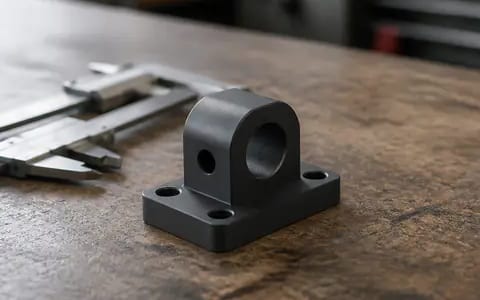
Anodising converts the surface by a chemical process to produce a hard wearing surface from within the metal itself, i.e. not a coating that can flake or wear. The surface layer is integral with the metal below it. Coatings, on the other hand, are applied as a separate layer and rely on adhesion to the metal below. They can wear and, in many cases, flake or peel off.
Why dimensions must allow for treatment
This layer grows out from the metal and so changes the size of the part. Thus it is normal practice to add the thickness of the anodised layer to the normal dimensions of a part when drawing it up. Tolerances too must be set up to take into account the anodising process. The normal practice is to add the tolerances for the anodising process to the normal machining tolerances.
Geometry also needs to be considered. Sharp edges and blind holes are treated differently to flat surfaces and need to be discussed with the surface finisher before the part is machined.
Where ordinary alloys can replace exotic ones
Hard anodising is typically a cold process which takes place in a controlled bath and results vary from alloy to alloy with some finishing better than others. However, by choosing a common, cost-effective alloy and surface treating it in an appropriate manner, it is often possible to achieve the properties of more expensive materials and designs. As illustrated by examples of aircraft and even space probes, this is a well-established design practice within the space sector and, indeed, amongst designers using a wide variety of engineering materials who consider surface engineering of conventional materials when designing parts.
What designers should decide at drawing stage
A very useful design tip is to list out the surface treatment(s) which you require on your drawings before ordering stock. If possible, get your surface treatment specialist to advise you which common materials form the best surface for your intended application. It may help you change to an alternative material, which is stocked cheaply by many suppliers.