It’s 6 p.m., your baby is signaling hunger loudly, and the fridge offers nothing but an empty jar and a slightly sad banana. That frantic scramble is usually what pushes parents to look for a better system. The fix isn’t a bigger kitchen or gourmet recipes—it’s a repeatable routine built around a few core steps. Before you start comparing appliances, check out this guide to baby food makers, since the right tool can cut your prep time significantly. This article walks you through a simple weekly routine that fits real schedules, not ideal ones.
Quick Answer
Build your routine around one weekly prep session: pick two to three single-ingredient purees, cook them in batches, blend to the texture your baby currently handles, and freeze in ice-cube trays or small containers. Thaw one portion the night before, and combine two cubes at mealtime for variety. The whole system takes roughly 60–90 minutes per week once you’ve done it a few times.
Key Takeaways
- One weekly batch session beats daily cooking for both time and food waste.
- Freezing in ice-cube trays gives you flexible portion sizes that grow with your baby’s appetite.
- Introduce one new ingredient at a time so you can spot reactions and allergies clearly.
- Texture progression matters more than recipe variety in the first months of solids.
- A routine only works if it matches your baby’s current feeding stage and your real weekly schedule.
Start With Your Baby’s Stage, Not the Recipe
The most common mistake is planning a menu before checking what texture and portion size your baby can actually handle. A routine built for a six-month-old beginner won’t fit a ten-month-old working on finger foods, and forcing it creates stress for both of you.
Rough stage guide
- Around 6 months: Thin, smooth single-ingredient purees. Start with 1–2 tablespoons per meal.
- 7–8 months: Thicker purees, gentle lumps, and simple combinations like apple and oat.
- 9–12 months: Soft mashed foods, small soft pieces, and more self-feeding attempts.
Pediatric guidance generally recommends starting solids around six months alongside continued breast milk or formula, and watching for readiness signs like good head control and sitting support. Your pediatrician’s advice should always override a general guide, especially if your baby was premature or has feeding concerns.
Once you know the stage, your prep decisions get much easier. A beginner’s batch is mostly single vegetables and fruits, blended thin. An older baby’s batch might include soft-cooked pasta, shredded chicken, or mashed beans.
The Weekly Prep Session: A Step-by-Step Routine
Pick one time slot you can realistically protect—often a weekend morning or a quiet weekday evening. The routine works the same way each time, which is what makes it stick.
- Choose two or three ingredients. One fruit, one vegetable, and optionally one protein or grain. Rotate weekly so exposure to different flavors builds over time.
- Wash, peel, and chop. Cut into similar-sized pieces so everything cooks evenly.
- Cook using one method per batch. Steam, roast, or boil. Steaming preserves more water-soluble nutrients and keeps textures consistent, but roasting brings out sweetness in vegetables like carrots and squash.
- Blend to the right texture. Add cooking liquid, breast milk, or formula to thin purees. Blend less for older babies who need lumps.
- Cool quickly. Spread purees in a shallow dish and refrigerate within two hours of cooking to limit bacterial growth.
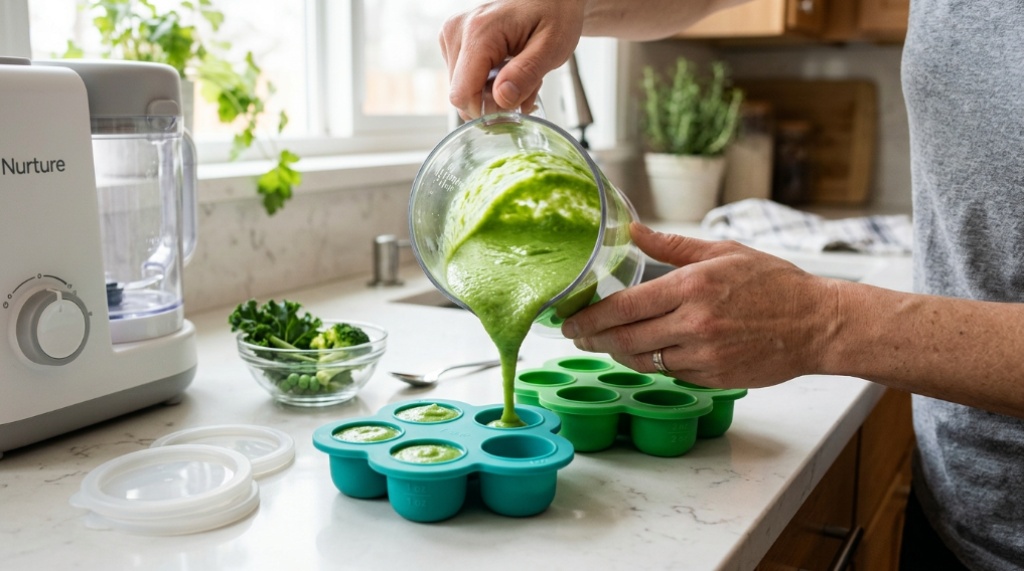
- Portion and freeze. Spoon into clean ice-cube trays or small freezer containers. Cover and freeze.
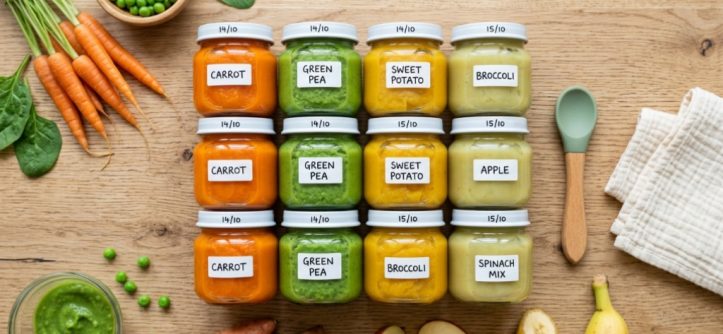
- Label everything. Write the ingredient and date on the tray or bag. Frozen purees are generally best used within one to three months for quality, though safety windows vary by food.
The first session usually takes longer than expected. By the third week, most parents finish in about an hour because the chopping and cleanup patterns become automatic.
How to Store and Thaw Baby Food Safely
Storage is where simple routines quietly fall apart. A few consistent habits prevent most problems.
| Storage Method | Typical Duration | Best For |
|---|---|---|
| Refrigerator (cooked puree) | About 2–3 days | Current week’s portions |
| Freezer (ice-cube trays) | Up to 1–3 months | Batch-cooked purees |
| Freezer (sealed containers) | Up to 1–3 months | Larger portions, combination meals |
Thaw cubes overnight in the refrigerator, or place the container in a warm water bath if you need it faster. Avoid leaving purees at room temperature for more than two hours. Once thawed, reheat gently and stir well to remove hot spots, then discard anything the baby didn’t finish from the bowl. Never refreeze thawed puree.
Making the Routine Fit Your Real Week
A meal-prep plan that ignores your actual schedule will collapse by Wednesday. Adjust these variables based on your situation:
- If you work outside the home: Batch on Sunday and freeze in single-serving portions so a caregiver can thaw one portion at a time.
- If you have twins or multiples: Double the batch but keep single-ingredient purees separate so you can mix combinations later.
- If you travel often: Keep a small stash of shelf-stable pouches as backup, and treat them as a supplement to your routine rather than the foundation.
- If your freezer space is limited: Use flat freezer bags instead of rigid containers—they stack and thaw faster.
The goal isn’t perfection. A week where you only prepped one vegetable is still a week where dinner wasn’t a crisis.
Common Mistakes That Break the Routine
Most routine failures trace back to a handful of predictable issues. Recognizing them early saves weeks of frustration.
- Prepping too much variety at once. Ten new flavors in one week makes it impossible to track reactions. Stick to one or two new foods.
- Ignoring texture progression. Babies who stay on smooth purees too long can struggle with lumpier textures later.
- Forgetting to label. Unlabeled frozen cubes become mystery food, and most parents toss them.
- Overinvesting in equipment. A steamer basket, a blender or immersion blender, and ice-cube trays cover most needs. Specialized appliances help but aren’t essential.
- Skipping the allergy watch. Introduce common allergens like egg, peanut, and dairy according to your pediatrician’s guidance, and space them out.
When to Adjust or Pause the Routine
Routines should flex around real life, not the other way around. Pause or simplify when:
- Your baby is teething, sick, or refusing solids—offer familiar foods and don’t force new ones.
- You’re switching from purees to finger foods, which changes prep entirely.
- You notice signs of an allergic reaction such as hives, vomiting, or breathing changes—stop the food and contact your pediatrician promptly.
- Your pediatrician recommends a specific feeding plan for medical reasons.
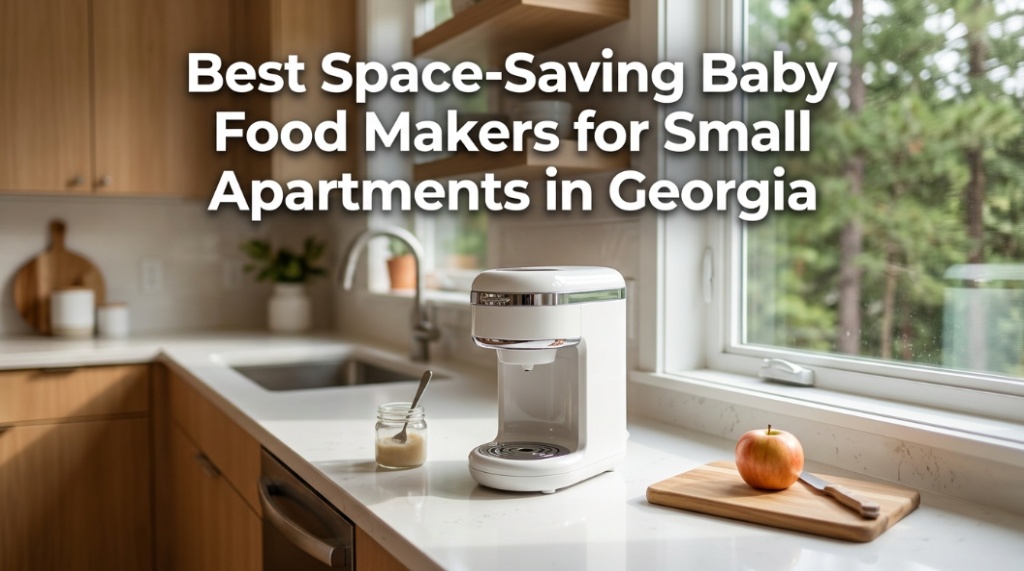
Any feeding concern that involves choking, gagging that doesn’t resolve, or poor weight gain should go to a medical professional, not a meal-prep article, If counter space is limited while preparing your batches, check out the guide on Best Space-Saving Baby Food Makers for Small Apartments in Georgia for compact appliance options.
Frequently Asked Questions
How far in advance can I make baby food?
Cooked purees generally keep about two to three days in the refrigerator and up to one to three months in the freezer. Label everything with the date so you’re not guessing later.
Can I mix different purees together?
Yes, once you’ve confirmed your baby tolerates each ingredient individually. Mixing after the introduction phase saves time and creates more interesting flavors.
Do I need a special baby food maker?
Not strictly. A steamer basket and a blender handle most tasks. A dedicated appliance can simplify cleanup and steam-and-blend steps, which matters if you’re prepping frequently.
How do I know if my baby is ready for solids?
Common readiness signs include sitting with support, good head and neck control, showing interest in food, and losing the tongue-thrust reflex. Pediatric guidance typically points to around six months, but your pediatrician’s assessment should guide the timing.
Is it safe to reheat frozen baby food more than once?
No. Reheat only what you plan to use, and discard any portion the baby didn’t finish. Repeated reheating increases the risk of bacterial growth.
What if my baby rejects a food I prepped?
Keep offering it on later days without pressure. It can take many exposures before a baby accepts a new taste or texture. Freeze small portions so rejection doesn’t mean wasted batches.
Conclusion
A simple baby food meal-prep routine comes down to one weekly batch session, correct texture for your baby’s stage, safe storage, and flexible portions. Start with two or three single ingredients, freeze in cubes, and thaw as needed. Adjust when your baby’s feeding stage changes or life gets busy. The routine that survives is the one that fits your real week—not the one that looks best on paper.